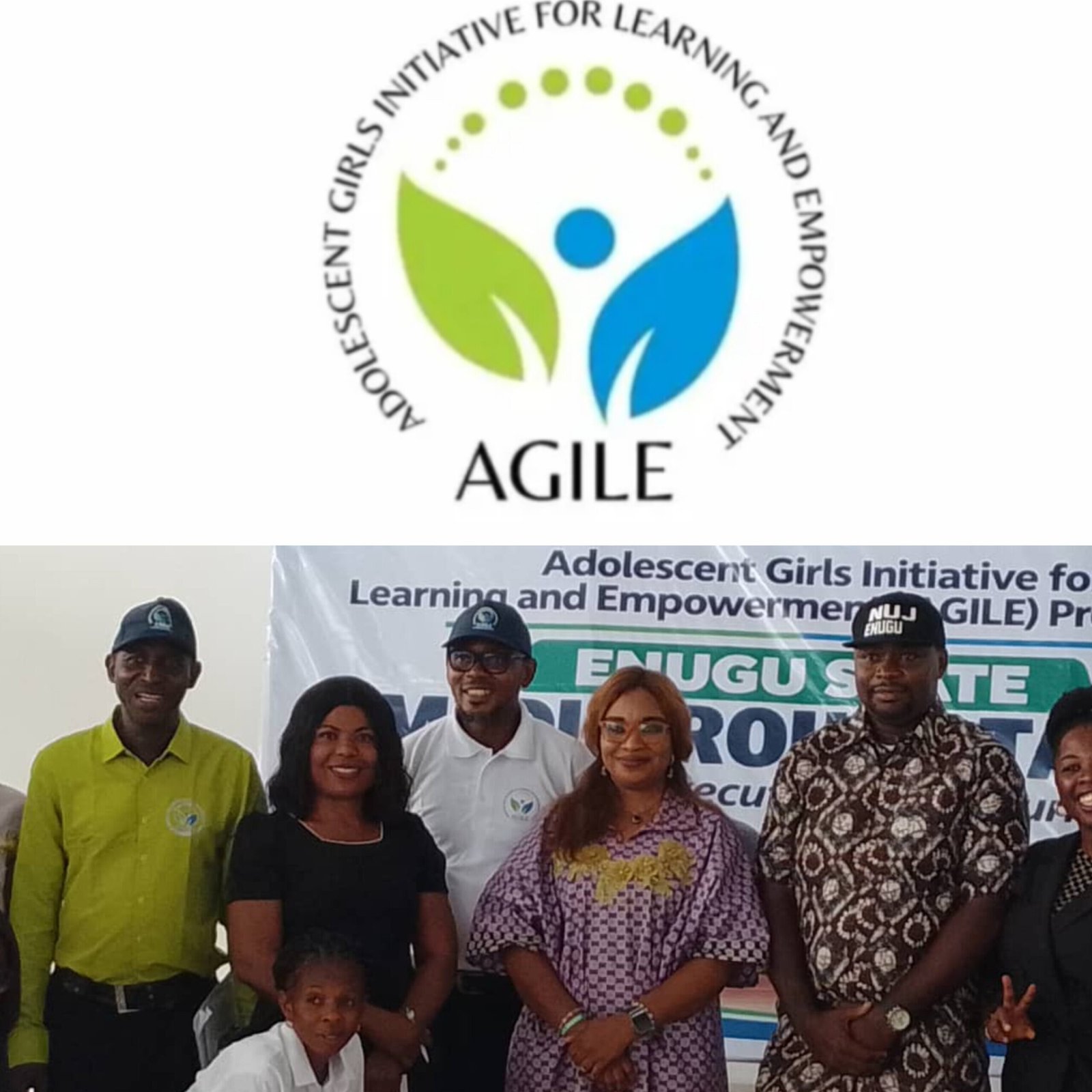
World Bank-backed initiative prioritises classroom rehabilitation, solar-powered boreholes, sanitation facilities, libraries and learning materials to improve school attendance, particularly among adolescent girls.
ENUGU— The Adolescent Girls Initiative for Learning and Empowerment (AGILE) Project has unveiled plans to improve infrastructure in 217 public secondary schools across Enugu State, as part of efforts to tackle poor learning conditions, school dropout rates and barriers to girl-child education.
The State Project Coordinator, Dr Ebele Chukwu-Onuora, disclosed this at a media roundtable held at the International Conference Centre, Enugu, on Wednesday.
Chukwu-Onuora said the intervention, being implemented under Component 1.2 of the World Bank-supported project, would focus on renovating existing school facilities, providing solar-powered boreholes, improving sanitation, equipping libraries and supplying essential teaching and learning materials.
She explained that the initiative was designed to address infrastructural deficiencies and other challenges preventing adolescent girls from enrolling in, remaining in and completing secondary education.
According to her, the project has undertaken needs assessments in the targeted schools to identify their infrastructure requirements and determine appropriate interventions.
“Our focus under Component 1.2 is to improve existing secondary school infrastructure and provide facilities that will make the learning environment safe, accessible and conducive for students, particularly adolescent girls,” she said.
Chukwu-Onuora explained that the assessments involved examining classroom conditions, water supply, sanitation facilities, libraries and instructional materials to establish the specific needs of individual schools.
She said the exercise would guide project implementation and ensure that interventions addressed identified deficiencies rather than adopting a uniform approach to infrastructure development.
The coordinator disclosed that the project team had visited the 217 schools to assess their needs and identify the facilities requiring rehabilitation or improvement.
She added that the assessments included screening for potential environmental and social risks associated with the proposed renovation works.
AGILE Commends Mbah, Targets Barriers to Girls’ Education
Chukwu-Onuora commended Gov. Peter Mbah for supporting the implementation of AGILE in Enugu State, describing the administration’s commitment as important to expanding educational opportunities for vulnerable children.
She said AGILE was a Federal Government initiative supported by the World Bank and implemented in collaboration with participating state governments.
The coordinator noted that the project was operating in 21 states, with Enugu being the only participating state in the South-East geopolitical zone.
She thanked Mbah for providing the necessary support to facilitate the project’s implementation in the state.
“The Enugu State Government, under Gov. Peter Ndubuisi Mbah, has continued to demonstrate commitment to improving education and creating opportunities for children to access quality learning,” she said.
Chukwu-Onuora explained that AGILE’s interventions extended beyond physical infrastructure to addressing social and cultural practices that discouraged children, particularly girls, from attending school.
She identified harmful traditional beliefs, economic difficulties, inadequate facilities and gender-related challenges as some of the obstacles affecting access to education.
According to her, the project is collaborating with communities, parents, traditional institutions and other stakeholders to challenge practices that undermine children’s educational opportunities.
“We must work with communities and stakeholders to ensure that tradition and culture do not prevent our children from receiving an education.
“We want to understand why children drop out of school, why some are not enrolled and what can be done to bring them back into the classroom.
“Our message is that education remains important and every child deserves the opportunity to learn,” she said.
The coordinator emphasised that improving educational infrastructure without addressing the social factors responsible for school exclusion would limit the project’s effectiveness.
She said sustained advocacy and community sensitisation were therefore essential to increasing enrolment, improving retention and ensuring that children completed their education.
Project Prioritises Toilets, Water and Menstrual Hygiene
Chukwu-Onuora identified inadequate sanitation facilities as a major challenge confronting students in several public secondary schools.
She said the situation was particularly difficult for adolescent girls who required safe, functional and private toilet facilities to manage menstrual hygiene.
According to her, the absence of appropriate sanitation facilities could discourage regular school attendance and negatively affect students’ confidence, dignity and educational performance.
She explained that AGILE would prioritise the rehabilitation and provision of water, sanitation and hygiene facilities alongside classroom improvements.
The coordinator said the intervention would include water supply systems, improved toilet facilities and other infrastructure necessary to promote students’ health and well-being.
She added that solar-powered boreholes would help provide reliable water supplies in schools experiencing water shortages.
“Providing a conducive learning environment goes beyond building classrooms. Students need water, functional toilets and other essential facilities that support their health, safety and dignity,” she said.
Chukwu-Onuora stressed that improving sanitation would help reduce barriers to attendance, particularly among adolescent girls.
She also identified inadequate textbooks, writing materials and other instructional resources as challenges affecting teaching and learning.
According to her, equipping libraries and providing essential educational materials would improve students’ access to information and support better academic performance.
AGILE Strengthens Protection Against Gender-Based Violence
The coordinator said the project was working closely with the Enugu State ministries responsible for gender affairs and the environment, as well as stakeholders involved in preventing and responding to gender-based violence.
She explained that the collaboration was intended to strengthen child protection, promote safer schools and address social practices that exposed adolescent girls to discrimination and abuse.
Chukwu-Onuora disclosed that gender-based clubs and safe environment clubs had been introduced in participating schools to improve awareness of gender-related issues and encourage responsible behaviour.
She said suggestion boxes had also been provided to enable students to report complaints, including gender-based violence and other grievances, through the project’s grievance redress mechanism.
The coordinator explained that such measures were intended to ensure that students could raise concerns and access appropriate support.
She added that AGILE would promote awareness of girls’ rights through advocacy programmes, community engagement and activities commemorating the International Day of the Girl Child and campaigns against gender-based violence.
Chukwu-Onuora further disclosed that children with disabilities were included in the project’s considerations, with three special schools in Enugu State identified for attention.
She stressed that the initiative was designed to promote inclusive education and ensure that vulnerable children were not excluded from available opportunities.
Ugwunnadi Explains Infrastructure Assessment, Implementation
Also speaking, the Component 1.2 Lead of Enugu State AGILE, Engr. Alex Ugwunnadi, said the project would adopt a needs-based approach to improving facilities in public secondary schools.
Ugwunnadi explained that the objective was to ensure that classrooms, water facilities, electricity and other essential infrastructure were functional and suitable for effective teaching and learning.
He said the project team would conduct physical inspections, document existing conditions and interact with students and school authorities to identify priority needs.
“Before any intervention, we carry out a needs assessment, take photographs, interact with students and school authorities, and identify the facilities that require attention.
“The objective is to ensure that the interventions respond to the actual needs of the schools and provide an enabling environment for learning,” he said.
Ugwunnadi explained that the assessment process would also involve advocacy and sensitisation to encourage community participation and strengthen understanding of the project’s objectives.
According to him, the interventions are not limited to adolescent girls but are expected to improve learning conditions for other students, including children with disabilities and those at risk of dropping out.
He said particular attention would be given to identifying how children living on the streets and those outside the formal school system could benefit from educational opportunities.
“We are looking at how best to make adolescent girls, children with special needs and those who are out of school benefit from this opportunity.
“Our concern is to provide the facilities and conditions that will encourage children to attend school and remain in the education system,” he said.
Ugwunnadi commended Chukwu-Onuora for coordinating efforts to ensure that the Enugu State project met the requirements established by the World Bank.
He also expressed appreciation to Gov. Mbah for supporting the implementation of the initiative.
The component lead thanked God for the progress recorded by the project team and urged stakeholders to sustain their cooperation to ensure successful implementation.
Media, Communities Urged to Support Initiative
Chukwu-Onuora called for stronger collaboration between the project team and media organisations to increase public awareness of AGILE’s interventions.
She said journalists had an important role in educating communities about the benefits of girl-child education and drawing attention to harmful practices that prevented children from attending school.
The coordinator urged parents, community leaders, traditional institutions and education stakeholders to support efforts to improve enrolment and retention.
She emphasised that community participation would be critical to ensuring that the project’s benefits were sustained.
According to her, stakeholders must encourage parents to enrol their children in school, challenge discriminatory practices and support the maintenance of educational facilities.
She said the initiative aligned with the Enugu State Government’s broader efforts to improve access to education and strengthen the quality of learning.
Ugwunnadi similarly appealed to communities to support project activities, particularly during infrastructure assessments, advocacy programmes and implementation.
He maintained that cooperation among government institutions, schools, parents and development partners would help achieve the desired outcomes.
AGILE’s National Education Programme
AGILE is a Federal Government initiative supported by the World Bank and implemented through the Federal Ministry of Education in collaboration with participating state governments.
The programme seeks to improve secondary education opportunities for adolescent girls, particularly those facing socioeconomic, cultural and infrastructural barriers.
The national project is organised around three broad components: creating safe and accessible learning spaces; fostering an enabling environment for girls; and strengthening project management and education systems.
Component 1.2 specifically focuses on renovating existing classrooms and improving water, sanitation and hygiene facilities in participating schools.
The programme is being implemented in 21 Nigerian states, including Enugu, according to the project’s national dashboard.
In Enugu, the proposed interventions in 217 public secondary schools are expected to improve the learning environment, support students’ welfare and address infrastructure-related barriers to school attendance.
The initiative also seeks to strengthen community participation, protect vulnerable learners and promote greater access to secondary education.