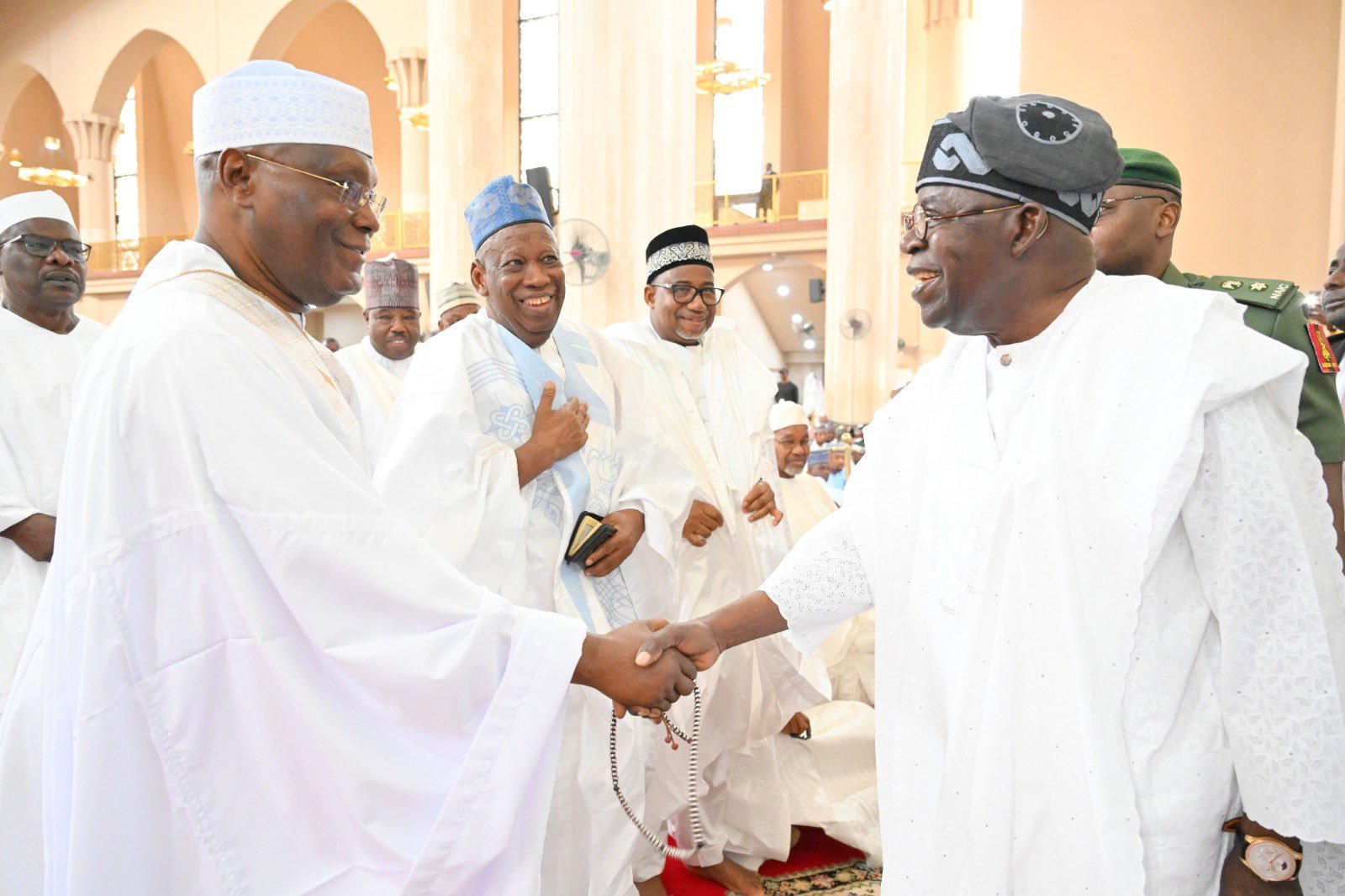
…President blames opposition for poverty at Kaduna rally, defends subsidy removal, promises prosperity
Former Vice President and African Democratic Congress presidential candidate, Atiku Abubakar, has criticised President Bola Tinubu for blaming opposition politicians for the hunger and poverty confronting Nigerians, describing the allegation as an attempt to evade responsibility for his administration’s economic policies.
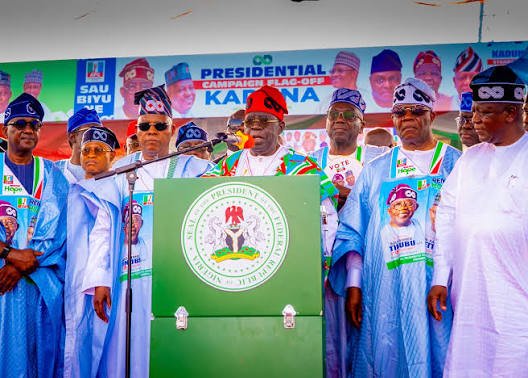
Atiku’s criticism followed Tinubu’s remarks at the All Progressives Congress presidential campaign flag-off at the Ranchers Bees Stadium, Kaduna, on Saturday, where the President accused his political opponents of creating the economic hardship they now use to criticise his government.
Addressing thousands of APC supporters, Tinubu insisted that his administration was working to reverse the country’s economic difficulties, promising Nigerians improved living conditions, economic recovery and prosperity if re-elected in 2027.
The President said, “I hear my opponents talking about hunger. Who created it? They did. They created hunger and poverty. We are trying to eradicate them.”
He also defended his administration’s performance, citing regular salary payments, infrastructure development and the activities of APC governors as evidence of progress under the ruling party.
Tinubu Defends Economic Reforms
The President maintained that his administration’s economic reforms, particularly the removal of petrol subsidy, were necessary to address longstanding distortions in the economy and create a foundation for sustainable growth.
He told supporters that Nigeria would not return to the previous subsidy arrangement, which he associated with corruption, fraudulent invoicing and fuel smuggling.
Tinubu also urged Nigerians to disregard what he described as misleading claims by opposition politicians, assuring voters that his administration remained committed to economic recovery and improved opportunities.
The President appealed to the electorate to renew his mandate in the January 16, 2027, presidential election, promising continuity in his administration’s development programmes.
He further praised APC governors for implementing development projects and maintaining regular salary payments, arguing that the ruling party had demonstrated its commitment to governance.
The campaign event also featured the symbolic inauguration of an 81-kilometre section of the Abuja–Kaduna highway, which the Presidency presented as part of the administration’s infrastructure achievements.
Atiku Accuses Tinubu of Shifting Blame
Reacting in a statement issued by the Director of Strategic Communication of the ADC Presidential Campaign Council, Phrank Shaibu, Atiku accused Tinubu of attempting to shift responsibility for Nigeria’s economic difficulties to political opponents.
The former Vice President argued that the APC had controlled the Federal Government since 2015 and should be held accountable for the economic conditions confronting Nigerians.
He described the President’s remarks as “either delusion or a staggering case of political amnesia”.
Atiku maintained that Nigerians were entitled to demand explanations about rising living costs, poverty, insecurity and the management of public resources.
He insisted that the economic consequences of government decisions could not be dismissed through political accusations.
According to him, the removal of petrol subsidy and the depreciation of the naira had placed additional financial pressure on households and businesses.
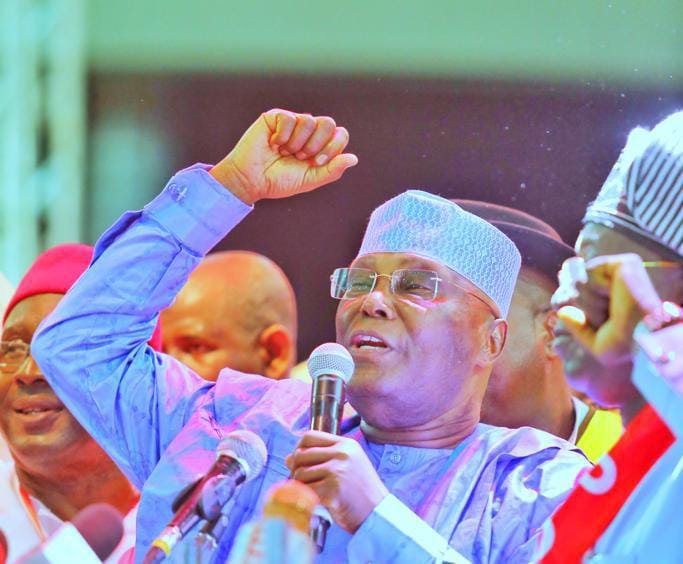
The ADC candidate questioned the administration’s handling of the exchange rate, citing the naira’s depreciation from approximately ₦471 to ₦1,329 against the United States dollar.
He also referenced a World Bank estimate that 63 per cent of Nigerians would live below the national poverty line in 2026, arguing that the projection raised questions about the effectiveness of the government’s economic policies.
The poverty projection and exchange-rate figures were cited by Atiku as part of his criticism of the administration.
Atiku Questions Government Spending
Beyond the rising cost of living, Atiku challenged the Federal Government to provide explanations about its budgetary decisions and expenditure.
He questioned the extension of the 2024 federal budget into 2025 alongside the implementation of a separate 2025 budget.
The former Vice President also raised concerns about what he described as ₦7.13 trillion recorded under energy security in 2024 and ₦11.2 trillion in pipeline-related expenditure involving the Nigerian National Petroleum Company Limited.
He demanded accountability for the expenditure, including details of the beneficiaries and projects executed.
Atiku further questioned what he described as a $12.4 billion discrepancy in Nigeria’s external accounts during the first half of 2026 and $22.5 million reportedly paid as additional charges on an Abu Dhabi financing facility.
He maintained that Nigerians deserved explanations about the management of public resources and the benefits derived from government expenditure.
The financial figures and alleged discrepancies remain claims raised by the opposition candidate and should not be treated as independently established findings.
Abuja–Kaduna Highway Sparks Criticism
Atiku also criticised the President’s decision to inaugurate a section of the Abuja–Kaduna Expressway during the campaign event.
He questioned the decision to conduct the inauguration from inside the stadium, alleging that the road had not been fully completed.
The former Vice President argued that ceremonial inaugurations should reflect the actual condition of infrastructure projects rather than political publicity.
His criticism contrasted with the Presidency’s position that Tinubu had inaugurated an 81-kilometre section of the highway as part of the administration’s infrastructure programme.
The disagreement highlighted the competing claims surrounding the government’s infrastructure achievements ahead of the presidential election.
Economic Hardship Takes Centre Stage Ahead of 2027
The exchange between Tinubu and Atiku comes as Nigeria’s political parties intensify preparations for the 2027 general elections, with economic hardship, unemployment, inflation, insecurity and public accountability emerging as major campaign issues.
Since assuming office in May 2023, Tinubu has introduced economic reforms, including petrol subsidy removal and foreign exchange liberalisation.
Although the administration has defended the measures as necessary to improve public finances, strengthen investor confidence and restore economic stability, Nigerians have faced significant increases in transportation costs, food prices and other essential expenses.
International reporting has highlighted improvements in some economic indicators, including foreign reserves and investor sentiment, alongside the continuing pressure of high living costs on households.
Atiku and other opposition figures have continued to question whether the administration’s reforms have translated into meaningful improvements in living standards.
The growing disagreement suggests that the 2027 presidential election will be shaped significantly by competing assessments of the government’s economic performance and the everyday experiences of Nigerians.
For Tinubu, the argument is that his administration is correcting longstanding economic problems and laying the foundation for prosperity.
For Atiku, the central issue is whether the government has delivered measurable improvements in the welfare of citizens after more than three years in office.