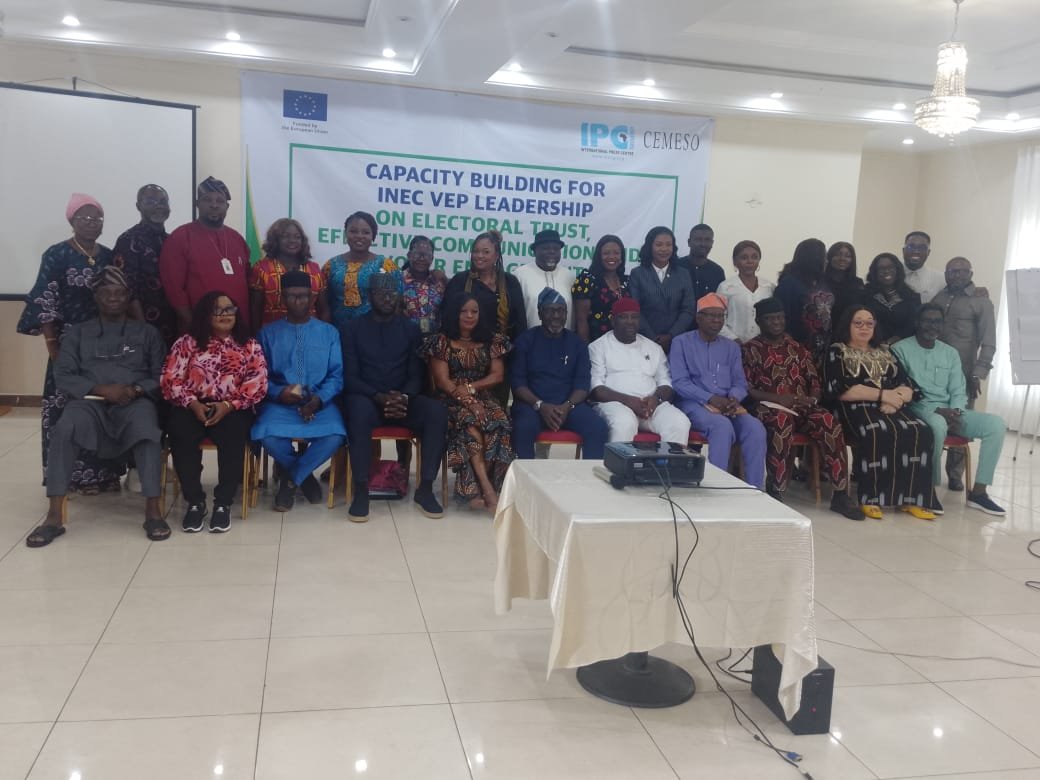
The International Press Centre (IPC) has warned that artificial intelligence-generated content, cloned voices and fabricated election materials pose a threat to the credibility of the 2027 general elections, urging the Independent National Electoral Commission (INEC) to strengthen voter education and fact-checking mechanisms.
The Executive Director of IPC, Lanre Arogundade, gave the warning at a two-day capacity-building programme for INEC’s Voter Education and Publicity (VEP) officials from the South-East and South-South in Enugu.
The programme, organised by IPC and the Centre for Media and Society (CEMESO), with European Union support under its Support to Democratic Governance in Nigeria initiative, focused on electoral trust, effective communication, legal literacy and voter engagement.
Arogundade said manipulated election materials, false narratives and misinformation could undermine public confidence in the electoral process, stressing the need for proactive communication and effective verification mechanisms.
He said electoral trust was built long before election day through accurate, accessible and verifiable information, adding that VEP officials had a critical responsibility to protect public confidence in INEC.
He also cautioned that inaccurate interpretations of the 2026 Electoral Act by electoral officials could erode institutional trust, noting that every public interaction had implications for the commission’s credibility.
Arogundade said the training would equip participants with skills in crisis communication, media relations, misinformation risk mapping, conflict-sensitive engagement, legal literacy and inclusive voter education.
He highlighted IPC’s iVerify fact-checking platform and its guide on identifying deepfakes, citing previous collaborations with INEC in Ondo, Anambra, Ekiti and Osun states, where fact-checking units were established with the centre’s support.
In his remarks, INEC Resident Electoral Commissioner in Enugu State, Chukwuemeka Chukwu, urged VEP officials to prioritise voter sensitisation, accurate information and prompt responses to public complaints.
Chukwu said effective electoral communication was essential to citizens’ understanding of the voting process and INEC’s commitment to conducting free, fair and credible elections.
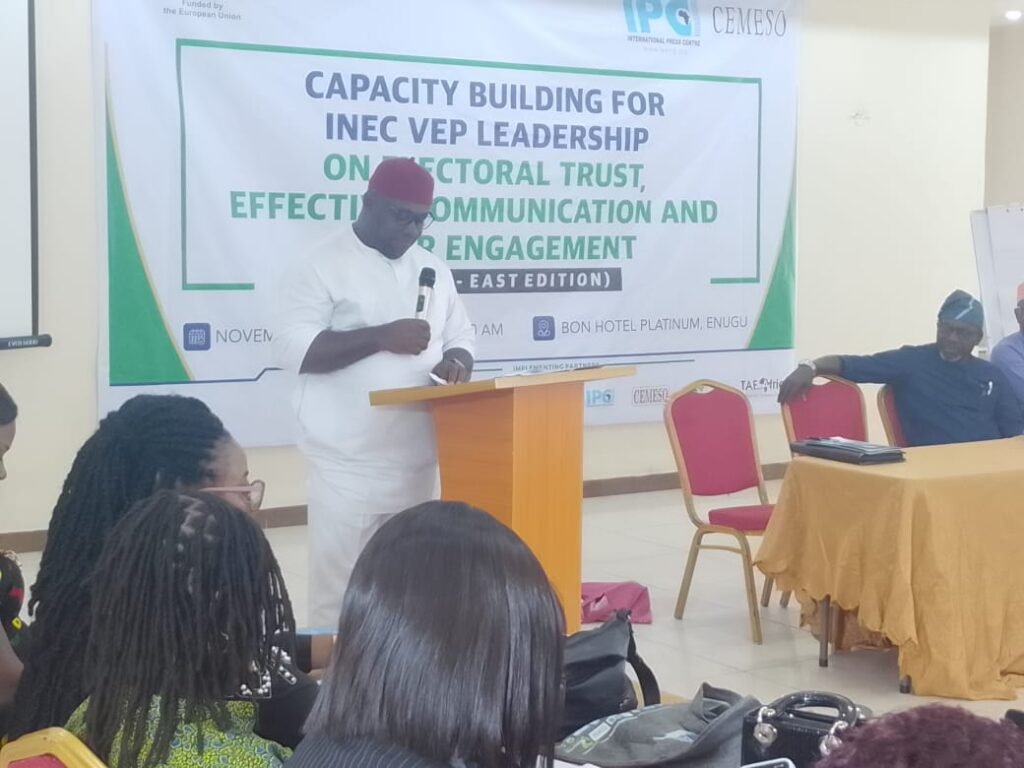
The REC cautioned officials against circulating unverified information and urged them to demonstrate professionalism in addressing public concerns and providing reliable electoral information.
He also called for inclusive voter education, particularly for persons with disabilities and other underrepresented groups, urging officials to identify and address barriers to their effective participation in elections.
According to him, the training would equip participants with the knowledge and skills to communicate changes in electoral procedures, address public concerns and prevent misinformation from escalating into electoral crises.
He acknowledged the contributions of IPC and CEMESO, describing their support as valuable to the commission’s efforts to improve communication and ensure that accurate information reached different categories of stakeholders.
The programme forms part of the EU-supported initiative to strengthen electoral information management, improve institutional communication and promote inclusive democratic participation ahead of the 2027 general elections.