Some prominent traditional rulers in the South-East have renewed calls for the complete abolition of the Osu caste system, describing the practice as discriminatory, dehumanising and incompatible with the equality of human beings.
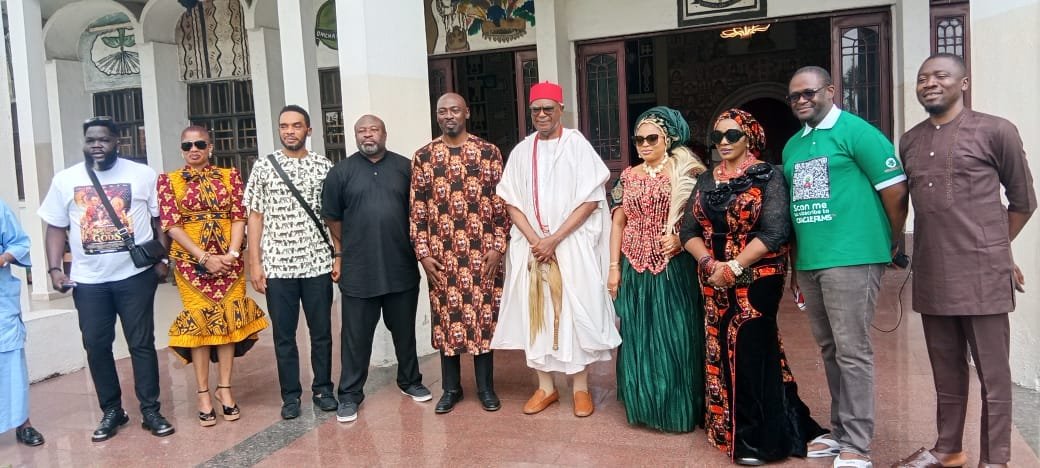
The royal fathers — Obi Alfred Achebe of Onitsha, Igwe Kenneth Orizu III of Nnewi, both in Anambra, and HRM Igwe Samuel Asadu, Chairman of the Enugu State Council of Traditional Rulers made the call separately on Wednesday when the producer and crew of the new Nollywood historical drama, Properties of the Gods, visited their palaces.
The visits were part of activities preceding the film’s nationwide cinema release on Sept. 4, and were intended to secure the blessings of the traditional institutions for the project.
The film, produced by veteran Nollywood actor and filmmaker Joseph Okechukwu, examines the historical roots and contemporary consequences of the Osu caste system, particularly its impact on social relationships, marriage, identity and communal acceptance. It is directed by Uzodinma Okpechi and Okechukwu Oku, with screenplay by Patrick Nnamani.
Achebe: ‘This discrimination must end forever’
Receiving the delegation at his palace in Onitsha, Obi Alfred Achebe said ignorance had sustained many superstitious beliefs and practices long after advances in knowledge and civilisation had rendered them obsolete.
Achebe stressed that no human being had the right to regard another as inferior, insisting that all people were created equal.
“Ignorance drives superstition, which is anachronistic in the 21st century.”
He added that differences in race, physical appearance or gender did not alter the fundamental equality of human beings.
The monarch described the Osu caste system as a “disgrace” and urged communities where the practice persisted to abolish it.
“This discrimination must end forever,” he said.
Achebe argued that education and increased knowledge had helped society to overcome several forms of superstition and should similarly be deployed to dismantle the beliefs underpinning the Osu system.
He, however, cautioned that legislation alone might not be enough.
According to him, sustained community mobilisation, advocacy and a change in mindset were necessary to eradicate a practice embedded in social attitudes.
The Obi also clarified that Onitsha did not operate the Osu system in the conventional form in which it was understood elsewhere, saying the traditional institution had a different understanding of the term.
The monarch’s position reflects a long-running debate over a practice that has historically restricted the social interaction and marriage prospects of people regarded as Osu. Academic studies describe the system as a form of social exclusion in which persons historically associated with deities or shrines were distinguished from the Nwadiala or freeborn.
Nnewi recalls abolition
At Nnewi, Igwe Kenneth Orizu III, who addressed the delegation through the Crown Prince, Prince Obi Orizu, recalled the traditional institution’s decision to abolish the Osu system.
He said the decision was fundamentally based on the question of why any group of people should continue to live under restrictions and be denied the freedom and opportunities available to others.
Orizu said the decision had been put to the test immediately after the pronouncement but had nevertheless continued to produce positive results.
“We cannot say that our forefathers were enslaved and then turn around and enslave other people ourselves. That would be contradictory,” he said.
He urged other communities yet to fully dismantle discriminatory practices to draw lessons from Nnewi’s experience.
Asadu endorses film
In Enugu, Igwe Samuel Asadu, Chairman of the Enugu State Council of Traditional Rulers, endorsed the project, describing Properties of the Gods as a timely intervention in a sensitive cultural conversation.
The royal father’s support adds to a growing body of calls from traditional institutions and civil society for the removal of inherited social labels that continue to affect people regarded as Osu.
The issue is not new. The former Eastern Region of Nigeria enacted legislation abolishing the Osu system in 1956, including penalties for practising the system or enforcing disabilities arising from it. Yet scholarly and contemporary accounts indicate that discriminatory attitudes have persisted in some communities despite the earlier legal prohibition.
‘Osu issue hinders Igbo unity’
Also speaking, Mr Emmanuel Oko, a philanthropist and media personality popularly known as Okwuluora Ndigbo, said the continued treatment of some people as Osu remained one of the obstacles to Igbo unity and social progress.
Oko commended the filmmakers for using cinema to confront a deeply rooted social issue and stimulate public discussion.
He said his personal experience had made him question the logic behind continuing to discriminate against people on the basis of an inherited status.
“I am from Nkanu, where the practice is worse. People still tell me to avoid those they call Osu, yet some of the people helping me most in Enugu are those they call Osu. I still do not understand it,” he said.
He urged residents, particularly in communities where the practice remained prevalent, to see the film and support efforts aimed at ending discrimination.
‘We want conversation, not confrontation’ — Okechukwu
Earlier, Joseph Okechukwu, the film’s producer, explained that the palace visits were intended to obtain the blessings of traditional rulers and place the conversation within the institutions that shape Igbo culture and communal life.
He stressed that the film was not intended to attack communities or provoke conflict.
“Our mission is to advance the conversation to a point where our people can easily understand that the time has come for us to embrace one another rather than scatter one another,” he said.
Okechukwu said the support expressed by the royal fathers demonstrated the importance of involving traditional institutions in efforts to confront discriminatory cultural practices.
He said Properties of the Gods was conceived as an extension of his longstanding campaign against the Osu caste system.
The filmmaker previously recalled that his activism culminated in an abolition exercise at Nri in Anambra State in 2018, after which, according to him, more than 75 communities began taking steps toward abolishing the practice.
Film brings an old question to a new audience
Properties of the Gods arrives at a time when questions surrounding culture, identity and the survival of inherited traditions are increasingly being debated across the South-East.
The historical drama uses the story of a young couple whose relationship is confronted by traditional restrictions to examine how an inherited social identity can continue to shape the choices and opportunities of people who had no part in creating the system.
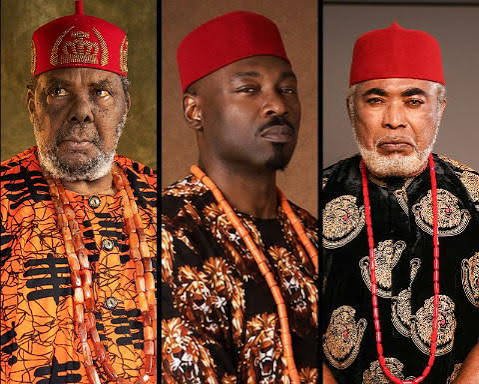
The film stars Pete Edochie, Enyinna Nwigwe, Maria Chike-Benjamin, Zack Orji, Hilda Dokubo, Elvina Ibru, Jennifer Eliogu, Obi Okoli Ofia Mbaka and the late Onyeka Onwenu, among others.
The production is being distributed nationwide by Nile Entertainment and is scheduled to open in cinemas across Nigeria on Sept. 4, 2026. The producers have also designated the release date as “Onyeka Onwenu Day” in honour of the late singer and actress, who featured in the film. A tribute night is scheduled for Sept. 3.
For the filmmakers and the traditional rulers who have endorsed the campaign, however, the significance of the film extends beyond the cinema.
It is a renewed attempt to confront a question that has survived generations: whether a society can claim to value equality while continuing to judge people by an inherited identity they never chose.
(NAN)