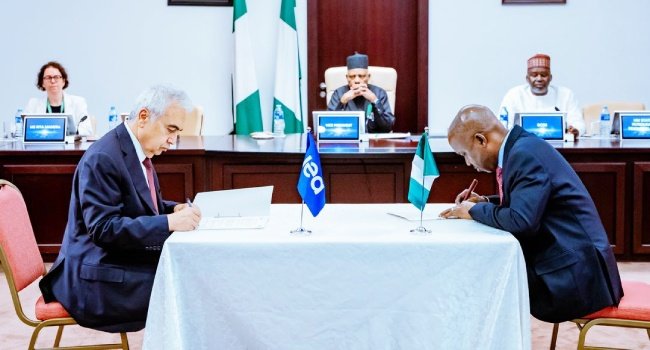
ABUJA — Nigeria and the International Energy Agency (IEA) have signed a Joint Work Programme (JWP) to deepen cooperation on energy data, policy and investment across the value chain, with the aim of strengthening economic growth and energy security.
The agreement was signed on Thursday in Abuja, shortly after Nigeria formally joined the IEA as an Association Country, following the unanimous approval of its application by the agency’s Governing Board in July.
Vice-President Kashim Shettima, who represented President Bola Tinubu at the signing, described Nigeria’s admission as a significant milestone and a reflection of the country’s strategic importance in the global energy landscape.
“Nigeria’s admission as an association country with the IEA is a significant milestone for our country, and it reflects Nigeria’s strategic importance in the global energy landscape and the confidence that IEA has placed in our commitment to constructive international energy cooperation,” Shettima said in a statement issued by his media aide, Stanley Nkwocha.
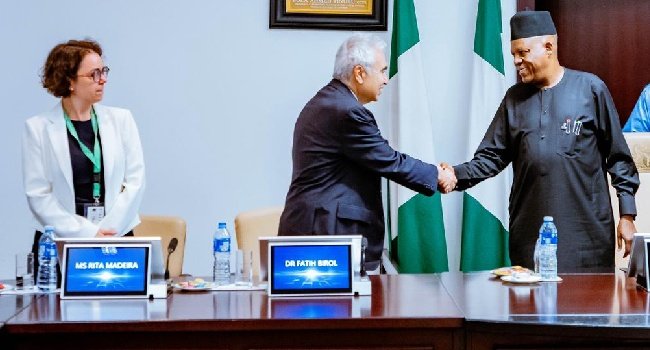
L-R: Africa Programme Manager, International Energy Agency, Ms. Rita Madeira; Executive Director, International Energy Agency, Fatih Birol; and Vice-President Kashim Shettima at the signing of the agreement for the JWP between Nigeria and IEA in Abuja on September 3, 2026.
He said Nigeria would benefit from the IEA’s institutional knowledge, intellectual resources, reach and expertise in developing the country’s energy sector.
“Given Nigeria’s potential, the country will benefit from IEA’s institutional knowledge, the intellectual resources, the reach and expertise to support our nation’s ambitions in this sector,” he said.
Shettima said the administration would continue working with stakeholders to contribute to the global energy debate, including efforts toward a fair and just energy transition.
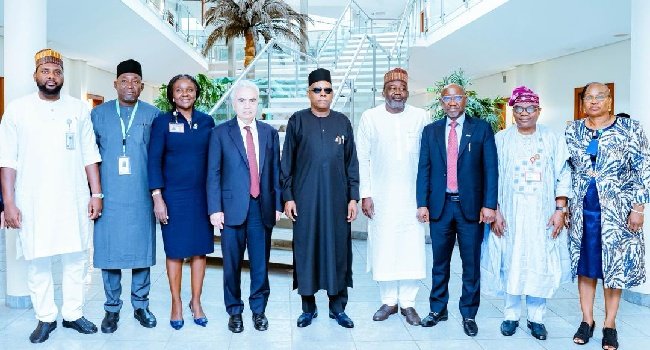
Nigeria and the International Energy Agency (IEA) signed an agreement for a Joint Work Programme to strengthen strategic partnership in the development of data for energy policy and investment across the value chain for economic growth and energy security in Abuja.
Earlier, IEA Executive Director Fatih Birol said the agency covered a wide range of energy technologies, including oil, gas, solar, nuclear power, artificial intelligence and electric vehicles.
He said the agency worked with leading energy experts in providing policy advice, data and technical expertise, adding that Nigeria’s admission followed extensive consideration and assessment.
Birol said the IEA Governing Board, comprising representatives of member governments including the United States, Japan, Germany, Italy and the United Kingdom, had unanimously accepted Nigeria.
He said the agency would support Nigeria over the coming years through policy advice and technical cooperation, including clean cooking, gas markets and training of Nigerian experts.
In a separate interview, Birol said he hoped Nigeria could at least double energy-sector investment within five years, citing the country’s oil, gas and renewable-energy potential and the need for additional capital.
He said the cooperation would also focus on natural gas, electrification, clean cooking, energy efficiency and improving energy-data collection and reporting.
Minister of State for Petroleum Resources (Gas), Ekperikpe Ekpo, said Nigeria’s admission was linked to the reforms undertaken by the Tinubu administration.
He said the JWP would facilitate the involvement of the IEA’s technical team in developing data for energy policy and investment across the value chain.
The Minister of State for Foreign Affairs, Sola Enikanoaiye, described the partnership as strategically important and acknowledged the role played by the Nigerian Mission in Paris in facilitating the process.
The Director-General of the Energy Commission of Nigeria, Mustapha Abdullahi, said the commission’s relationship with the IEA had previously resulted in the joint sponsorship of Nigeria’s last National Energy Master Plan.
He said the new formal relationship would strengthen cooperation between the commission and the IEA.
The IEA said Nigeria’s admission builds on cooperation between both sides dating back to 2014 and would deepen collaboration on secure, affordable and sustainable energy systems.