|By Franklin Ebuka
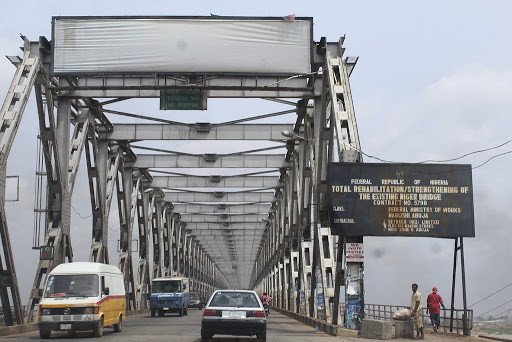
Anyone with a good knowledge of the deterioration of the First Niger Bridge’s carriageway and the vandalism of critical components, including portions of the expansion-joint steelwork and nuts and bolts on the stanchions and steel trusses, will appreciate the necessity of the ongoing emergency rehabilitation and maintenance works.
The First Niger Bridge was completed in December 1965 and built by the French construction company, Dumez. At approximately 1.404 kilometres in length, the iconic bridge is now about 61 years old.
The bridge, which links Onitsha in Anambra State with Asaba in Delta State, remains a major transportation and commercial corridor connecting the South-East with other parts of the country. Its importance to commerce, transportation and the daily lives of millions of Nigerians cannot be overstated.
For this reason, virtually every reasonable person should appreciate the need for periodic rehabilitation and maintenance of the bridge.
However, while the rehabilitation itself is necessary, the manner in which the current two-week closure was handled raises serious questions about government’s sensitivity to the realities faced by the people who depend on the bridge daily.
The Federal Ministry of Works announced on September 4 that the bridge would be fully closed to traffic from September 7 to September 21 to allow emergency maintenance and rehabilitation works. That effectively gave motorists about three days’ notice before the closure.
Motorists were directed to use the Second Niger Bridge through Obosi towards Asaba and other destinations during the closure. The Ministry also said traffic diversion arrangements, road signs, safety barriers and traffic-control personnel would be deployed.
The question, however, is whether sufficient preparation was undertaken along the alternative routes before the First Niger Bridge was shut.
Several routes connecting to and from the Second Niger Bridge already face significant traffic and road challenges. Diverting the enormous volume of traffic normally carried by the First Niger Bridge was therefore always going to place additional pressure on the alternative corridors.
Why, then, were the worst portions of the alternative routes not given immediate remedial attention before the closure?
The rehabilitation of one critical piece of infrastructure should not create avoidable hardship for millions of people who depend on it every day.
There should have been adequate preparation before the closure. At the very least, the worst sections of the alternative routes should have received emergency palliative works to make them capable of absorbing increased traffic.
These may appear to be little things, but they are the kinds of measures that make people feel that government understands their realities and cares about their wellbeing.
WATER TRANSPORTATION SHOULD HAVE BEEN EXPLORED
Another option that, in my view, deserved serious consideration is water transportation between Onitsha and Asaba.
Thousands of people live on one side of the Niger and work, trade or conduct business on the other. The First Niger Bridge is not merely a route for long-distance motorists; it is a daily lifeline for residents, traders, workers, students and businesses in both cities.
Government could have explored temporary and properly regulated water transportation services during the closure as an additional means of easing pressure on the roads.
Such an arrangement would require suitable boats, trained operators, life jackets, security personnel, emergency-response arrangements and other necessary safety measures. The relevant authorities, including the Ministry of Marine and Blue Economy and the National Inland Waterways Authority, could have been engaged to determine whether such a temporary service was feasible and safe.
Water transportation would not necessarily eliminate the pressure on the roads, but it could provide commuters with an additional transportation option during the rehabilitation period.
LESSONS FROM LAGOS
There is also a lesson to be learnt from Lagos State.
When plans were made for the rehabilitation of the Kara Bridge section of the Lagos-Ibadan Expressway, the proposed August 2026 commencement was suspended for a traffic review following concerns over the notice period and the need for effective traffic management.
The repair eventually commenced on September 8 and is expected to run for two weeks. The intervention involves the replacement of deteriorating expansion joints, with traffic-management agencies deployed to minimise disruption.
The lesson is simple: infrastructure rehabilitation is important, but the people who use the infrastructure must also be considered.
That same principle should have guided the planning of the First Niger Bridge closure.
Nobody is saying the bridge should not be rehabilitated. On the contrary, given its age, deteriorated carriageway and the reported vandalism of critical components, the intervention is imperative.
But government must understand that the success of an infrastructure project is not measured only by the quality of the work being done. It is also measured by how effectively the people are protected from avoidable hardship while the work is ongoing.
Before shutting the First Niger Bridge, government should have:
Carried out urgent remedial works on the most damaged portions of the alternative roads leading to and from the Second Niger Bridge.
Conducted a comprehensive traffic-impact assessment to determine how the closure would affect Onitsha, Asaba, Obosi and surrounding communities.
Explored the feasibility of temporary water transportation between Onitsha and Asaba to provide commuters with another means of crossing the Niger.
Provided adequate safety infrastructure for any temporary water transport, including life jackets, trained personnel, security and emergency-response arrangements.
Given motorists and residents sufficient advance notice so that businesses, transport operators, workers and other commuters could properly plan around the closure.
Put a comprehensive traffic-management plan in place before the closure.
The First Niger Bridge deserves to be preserved. However, rehabilitating the bridge must not mean abandoning the people who depend on it.
Government must learn to plan infrastructure projects from the perspective of the people who will be affected by them.
Infrastructure is built for the people. Therefore, the people must remain at the centre of infrastructure planning.