|By Franklin Ebuka
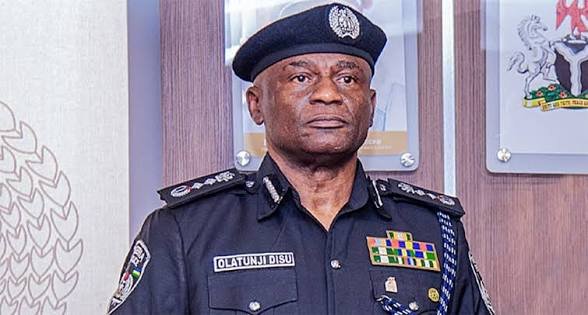
The Inspector-General of Police, Tunji Disu, has, in recent days, stirred a fresh conversation after expressing concern over the growing practice of Nigerians recording police officers while on duty and turning such encounters into social media content.
Disu spoke when the President of the Nigerian Bar Association (NBA), Oyinkansola Badejo-Okusanya, accompanied by members of the association’s executive committee, visited him at the Force Headquarters in Abuja.
According to the IGP, recording police officers while they are on duty or at their stations is somewhat awkward, invasive and intrusive. He particularly expressed concern about the use of concealed cameras to record policemen at police stations.
His comments followed the March 17 judgment of the Federal High Court in Warri, Delta State, which was widely reported as affirming that Nigerians have a constitutional right to record police officers performing their duties in public. The ruling, however, should not be interpreted as an unrestricted licence to record police officers in every circumstance, particularly where legitimate privacy concerns arise.
The IGP said the judgment had “jolted” police officers and triggered a surge in citizens filming policemen. He said some Nigerians had gone as far as recording police officers while they were eating in restaurants. Disu argued that the development could demoralise officers who risk their lives to protect citizens and appealed to Nigerians to exercise restraint and not turn police officers into content for skits or social media.
There is, of course, a legitimate conversation to be had about privacy and the recording of police officers when they are off duty and engaged in genuinely private activities. Nobody should deliberately invade the legitimate private life of another person simply because that person wears a police uniform.
But that is not the heart of the matter.
The more fundamental question is: Why have Nigerians become so determined to record the police?
This is the elephant in the room.
The IGP’s analogy about whether citizens can walk into lawyers’ offices or courtrooms and start recording misses the point. The two situations are not necessarily comparable. The question is not whether every public official should be subjected to unrestricted filming everywhere.
The question is what brought us to the point where Nigerians increasingly feel that they need a camera whenever they encounter a police officer.
THE CAMERA DID NOT CREATE THE PROBLEM
For years, Nigerians have complained about police brutality, extortion, unlawful detention, intimidation, assault, harassment, torture and other forms of abuse by some officers. In too many cases, citizens have also complained about difficulty securing accountability when such allegations are made.
People now record police encounters because they want evidence.
Evidence against extortion. Evidence against assault and intimidation. Evidence against false allegations or possible set-ups. Evidence against unlawful arrest. Evidence against an officer denying that an encounter ever happened.
In many cases, the camera has become the citizen’s witness.
The reality is that when an ordinary Nigerian walks into a confrontation with a police officer, there is often a significant imbalance of power. The officer has the authority of the state behind him. The citizen has little more than his word.
And when the citizen subsequently complains, the inevitable question can be: “Where is your evidence?”
The camera therefore becomes a form of protection.
How does a citizen prove that he was assaulted? How does he prove that money was demanded from him? How does he prove that he was threatened? How does he prove that an officer insulted or abused him? How does he prove that he was subjected to degrading treatment? How does he prove that a particular incident occurred at all?
In such circumstances, recording the encounter is not necessarily about creating social-media content. For many Nigerians, it is about self-preservation and preservation of evidence.
There is an irony here that the police leadership should seriously consider.
Nigerian criminal justice law itself recognises the importance of documenting interactions between law-enforcement officers and suspects. Section 60 of the Police Act 2020 addresses the recording of a suspect’s statement, while the Administration of Criminal Justice Act contains provisions on the electronic recording of confessional statements. The Supreme Court has also affirmed the importance of compliance with those safeguards.
The principle behind such safeguards is straightforward: technology can provide an objective record and help protect suspects from abuse while also protecting law-enforcement officers from false allegations.
A properly functioning recording system can protect a police officer just as much as it protects a suspect.
If an officer is falsely accused, a recording can help clear him. If a suspect makes a voluntary confession, the recording can establish what happened. If an officer abuses a suspect, the recording can expose the abuse.
Everybody benefits from transparency.
So, what is the police authority afraid of?
This is where the IGP’s concerns deserve deeper interrogation. If the police are conducting themselves professionally and within the law, why should the presence of a camera automatically be regarded as a threat?
Why should the police leadership be more concerned about the camera than about the conduct that makes Nigerians feel compelled to carry one?
The answer cannot simply be that policemen are being “demoralised.”
Perhaps the better question is: What has happened to public confidence in the police that citizens now feel unsafe without recording their encounters?
The camera is not the disease. The camera is a symptom.
It is a symptom of a trust deficit. It is a symptom of the fear of abuse. It is a symptom of the belief that an officer’s word may eventually carry more weight than that of the citizen.
It is a symptom of a society where people increasingly feel that if an encounter is not captured on video, it may be difficult to prove what happened.
The lesson is simple: when people lose confidence in those who are supposed to protect them, they begin looking for alternative means of protecting themselves.
That is what the cameras represent for many Nigerians. They represent an attempt to create accountability where trust has diminished.
Rather than complain about the cameras, the police leadership should ask why Nigerians believe they need them in the first place.
ADDRESS THE ELEPHANT IN THE ROOM
The IGP should concentrate his energy on addressing the issues that have contributed to the erosion of public confidence in the police.
Deal decisively with extortion, brutality, unlawful arrests, torture, intimidation and officers who abuse their uniforms.
Deal with officers who turn police stations and roadblocks into revenue-collection points.
Deal with the culture of impunity.
And, most importantly, make the accountability mechanisms credible enough that Nigerians no longer feel that the only way to protect themselves is to put a phone camera between themselves and a police officer.
If the police demonstrate sincerity of purpose in tackling misconduct within the system, Nigerians will gradually cease their fire. The cameras will become less necessary—not because Nigerians were ordered to stop recording, but because they will no longer feel compelled to record every encounter.
A police force that enjoys the confidence of the people does not need to fear cameras.
A professional police officer should be able to say: “Record me. I have nothing to hide.”
And perhaps that is the real conversation the police leadership should be having.
If the police authorities are genuinely uncomfortable with the judgment of Justice Hyeladzira Nganjiwa, the appropriate legal response is not simply to ask citizens to exercise restraint. If the police believe the ruling is legally wrong or too broad, the appropriate response is to challenge it through the appellate process.
Until then, the police leadership should understand one thing: Cameras do not go where there is nothing to capture.
And when Nigerians finally feel safe enough to put their phones back in their pockets, it will not be because the cameras were defeated.
It will be because trust was restored.
PoliceAccountability, PoliceReform, NigeriaPoliceForce