By Sammie Echi Agbo
As Nigeria approaches the 2027 general elections, the conversation about electoral credibility must extend beyond voter registration, political campaigns, technological innovations and the distribution of election materials. At the heart of a credible electoral process lies a fundamental question: Can Nigerians freely exercise their democratic rights without fear, intimidation, manipulation or violence?
Elections are not credible merely because voting takes place. They are credible when citizens can participate freely, candidates compete on equal terms, electoral officials perform their duties impartially, and security institutions protect the process without political interference.
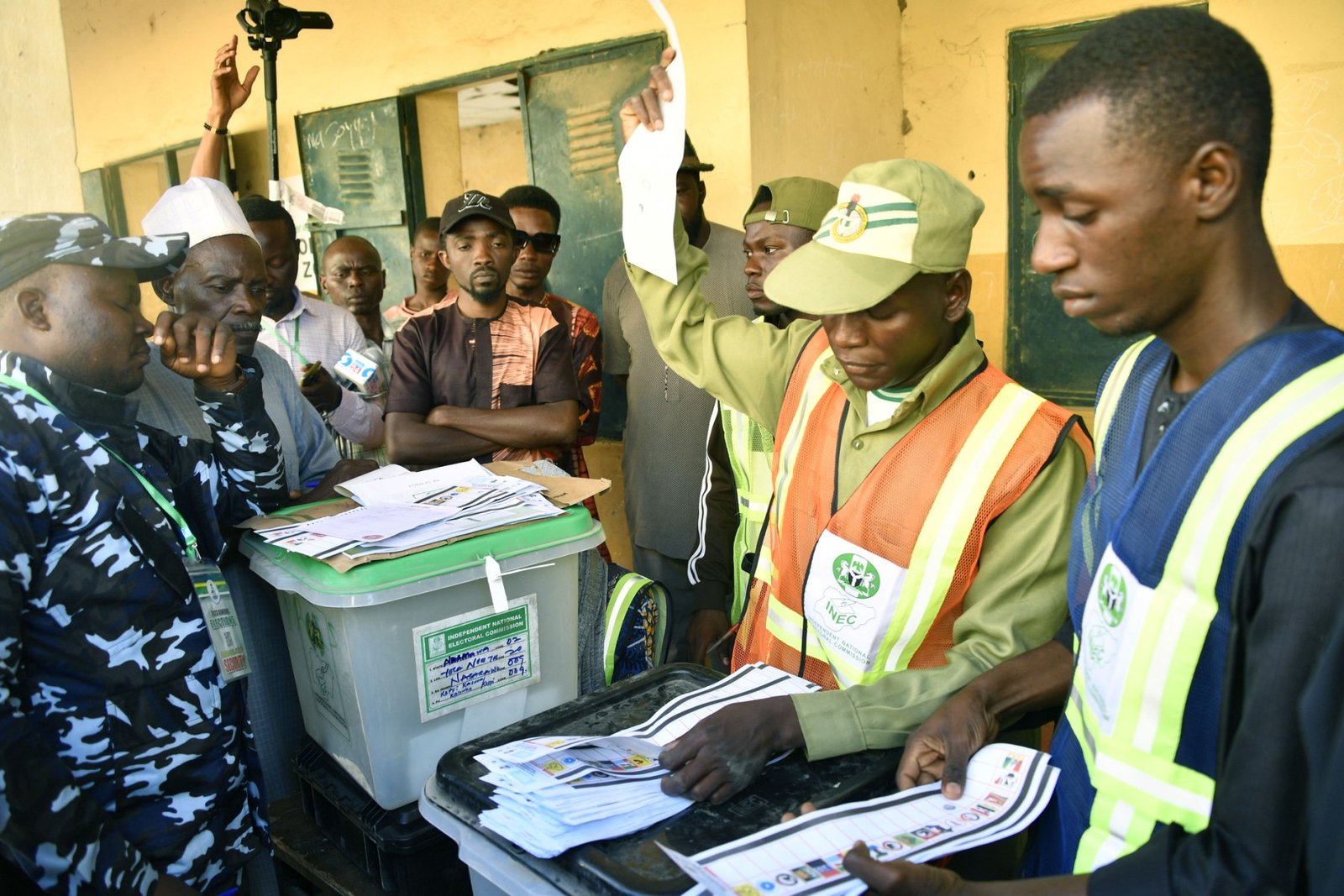
Nigeria’s electoral history, however, presents a troubling contradiction. Despite the deployment of thousands of security personnel during elections, incidents of voter intimidation, ballot snatching, political violence, and disruptions at collation centres have continued to undermine public confidence in the democratic process.
The 2023 general elections offered another opportunity to strengthen Nigeria’s democratic institutions. However, reports by international observers, particularly the European Union Election Observation Mission and the joint National Democratic Institute and International Republican Institute mission, identified significant operational failures, electoral violence, voter intimidation and weaknesses in institutional accountability.
The question, therefore, is not simply whether Nigeria has enough security personnel to conduct the 2027 elections. It is whether the institutions responsible for protecting the electoral process have demonstrated the capacity, independence and professionalism required to safeguard democracy.
WHERE DID INEC AND SECURITY AGENCIES GET IT WRONG?
The weaknesses of Nigeria’s electoral process cannot be attributed to one institution alone. They reflect a combination of administrative shortcomings, inadequate coordination, intelligence failures, weak enforcement of electoral laws and the persistent influence of political interests.
INEC, as the principal electoral management body, has the constitutional responsibility of organising and supervising elections. Its responsibility goes beyond providing ballot papers and deploying electoral officials. It must establish an environment in which every eligible voter can exercise their franchise freely and every participant has confidence in the process.
The 2023 elections exposed significant weaknesses in logistics, communication, technological deployment and transparency. The EU Election Observation Mission documented delayed deployment and opening of polling units, alongside problems with the uploading of the presidential election results to the INEC Result Viewing Portal (IReV).
These failures raised questions about the Commission’s preparedness, operational efficiency and ability to manage public expectations during a highly competitive election.
However, INEC’s shortcomings must also be examined alongside the performance of security agencies.
The Nigeria Police Force, which leads election security operations, works alongside the Department of State Services (DSS), Nigeria Security and Civil Defence Corps (NSCDC), the Armed Forces and other relevant agencies under the Inter-Agency Consultative Committee on Election Security (ICCES). Despite this elaborate security arrangement, electoral violence has remained a recurring challenge.
One fundamental weakness has been the tendency to prioritise physical deployment over preventive intelligence and effective response mechanisms. Security personnel may be present at polling units, yet their presence becomes ineffective when they fail to intervene promptly against intimidation, violence or the destruction of electoral materials.
Security deployment without effective enforcement is little more than a show of strength.

HAS INSTITUTIONAL NEUTRALITY BEEN COMPROMISED?
Perhaps one of the most troubling questions confronting Nigeria’s democracy is whether the neutrality of institutions and agencies responsible for protecting elections can still be guaranteed. The credibility of an election depends not only on the independence of INEC but also on the political neutrality of security institutions.
Where security personnel are perceived to be protecting certain political interests, intimidating opposition supporters or selectively enforcing electoral regulations, public confidence in the entire democratic process begins to deteriorate.
There have been allegations across different electoral cycles of security operatives being used to intimidate political opponents, disrupt opposition activities and ignore electoral offences committed by politically influential individuals. Such allegations must be investigated rather than dismissed or accepted without evidence.
Nevertheless, the perception of institutional bias is itself a serious democratic problem. Citizens who believe that security agencies are not impartial may lose confidence in their ability to protect their votes.
The law is clear that security personnel deployed for elections must perform their duties professionally and impartially. INEC’s Regulations and Guidelines for the Conduct of Elections, 2022, expressly require security agents to prevent violence, protect electoral personnel and materials, maintain order at polling and collation centres, and comply with lawful directives issued by the Commission.
Institutional neutrality must therefore be demonstrated through conduct, not merely proclaimed in official statements.

It is important to recognise that not every operational failure establishes political compromise. However, repeated incidents of selective enforcement, unexplained inaction and partisan conduct, where substantiated, demand investigation and accountability.
WHY HAS MASSIVE SECURITY DEPLOYMENT FAILED TO STOP ELECTORAL INSECURITY?
Nigeria has repeatedly demonstrated its capacity to mobilise large numbers of security personnel for elections. Yet the persistence of electoral violence suggests that the problem is not simply the number of officers deployed. The real challenge lies in how security operations are planned, coordinated, supervised and executed.
First, intelligence gathering has not always translated into effective preventive action. Election-related violence rarely emerges without warning. Political rivalries, threats, mobilisation of armed groups, inflammatory campaigns and tensions within communities often provide early indications of possible violence.
Security agencies must be able to identify these threats and intervene before they escalate.
Second, there are weaknesses in operational coordination. The existence of ICCES provides an institutional framework for cooperation between INEC and security agencies. However, coordination must extend beyond meetings at national headquarters.
Effective election security requires clear command structures, timely intelligence sharing, established communication channels and rapid response mechanisms at state, local government and ward levels.
Third, accountability remains a major concern. Arrests without prosecution and convictions do little to discourage electoral offenders. When political thuggery, voter intimidation, ballot box snatching and attacks on electoral officials go unpunished, perpetrators are encouraged to repeat such actions.
Fourth, security personnel must be adequately trained in electoral procedures, human rights standards, crowd management and the appropriate use of force. Their responsibility is to protect voters and the electoral process, not to intimidate citizens or interfere with their democratic choices.
Ultimately, security effectiveness should not be measured by the number of officers deployed but by the extent to which voters, electoral officials, observers and political participants are protected.
WHAT SHOULD HAVE BEEN DONE DIFFERENTLY?
The lessons from previous elections must inform a different approach to the 2027 general elections. First, INEC and security agencies must adopt a genuinely intelligence-driven security strategy. Electoral risk assessments should begin long before election day, identifying communities with histories of political violence, areas vulnerable to intimidation and locations where political tensions could escalate.
Second, there must be stronger accountability mechanisms. Every allegation of misconduct by electoral officials or security personnel should be independently investigated. Officers found culpable must face appropriate disciplinary and legal consequences, irrespective of their rank or political connections.
Third, security deployment must be strategic rather than merely numerical. High-risk polling units, collation centres, electoral offices and transportation routes require adequate protection. There must also be effective emergency response arrangements for communities where violence threatens to disrupt voting.
INEC must strengthen its logistics, technological infrastructure and public communication systems. The problems experienced with result transmission in 2023 demonstrate why electoral technology must be thoroughly tested under real operating conditions, with transparent contingency arrangements.
Political parties and their candidates must be held accountable for the conduct of their supporters. Political leaders who encourage violence through inflammatory rhetoric must not be allowed to escape responsibility while ordinary citizens bear the consequences.
Finally, citizens must be encouraged to participate in the electoral process peacefully, reject vote-buying and report threats or electoral offences through appropriate channels.
THE UNDERLYING IMPLICATIONS FOR NIGERIA’S DEMOCRACY
Electoral insecurity has consequences that extend far beyond election day. When citizens are intimidated or prevented from voting, the legitimacy of the electoral process is weakened. When political violence determines who participates and who withdraws from the process, democracy becomes vulnerable to the influence of force rather than the will of the people.
The implications are significant.
Voter apathy may increase. Citizens who repeatedly witness violence, manipulation and impunity may conclude that their votes do not matter. This weakens democratic participation and gives greater influence to political actors who rely on coercion rather than popular support.
Electoral insecurity threatens political stability. Disputed elections, unresolved grievances and perceived institutional bias can deepen divisions, provoke protests and undermine confidence in government.
It weakens the legitimacy of elected leaders. A government that emerges from an electoral process widely perceived as compromised may struggle to command public trust, regardless of its policy intentions.
It discourages credible political participation. When aspiring candidates, party supporters, journalists and election observers operate under threats, the democratic space becomes increasingly restrictive.
Perhaps most importantly, electoral insecurity creates a dangerous precedent in which political power is pursued through intimidation rather than persuasion, competition and accountability.
THE ROAD TO 2027: WHAT MUST CHANGE?
The 2027 general elections must represent an opportunity to correct the weaknesses of previous electoral cycles.
According to INEC’s announced timetable, the presidential and National Assembly elections are scheduled for January 16, 2027, while the governorship and state Houses of Assembly elections are scheduled for February 6, 2027.
The Commission and relevant security institutions must therefore move beyond routine assurances and demonstrate measurable preparedness.
Interestingly, INEC’s leadership has already emphasised the need for a more intelligence-driven approach to election security through its proposed ICCES coordination framework. This is a welcome direction, but its effectiveness will ultimately depend on implementation at the grassroots.
There must be clear operational responsibilities, effective supervision, credible intelligence gathering, prompt response to threats and transparent reporting of security incidents.
Furthermore, the National Assembly must strengthen the legal and institutional framework for electoral accountability, while the judiciary must ensure timely and impartial adjudication of election-related disputes.
Civil society organisations, the media and election observers also have important roles to play in monitoring the process, documenting violations, educating voters and demanding accountability.
The media, in particular, must move beyond reporting election violence after it occurs. Investigative and solutions-oriented journalism should expose emerging threats, scrutinise institutional preparedness and provide citizens with accurate information without amplifying hate speech or political propaganda.
Democracy cannot be secured by security agencies alone. It requires responsible political leadership, independent institutions, an informed electorate and citizens willing to defend democratic values.
CONCLUSION: SECURITY MUST PROTECT THE VOTE, NOT POLITICAL INTERESTS
As Nigeria approaches 2027, the central issue should not be how many security personnel will be deployed across the country, but whether those personnel will be sufficiently prepared, professionally supervised and genuinely committed to protecting the democratic rights of every Nigerian.
INEC must demonstrate administrative competence and transparency. Security agencies must prove their neutrality through impartial conduct and decisive action against electoral offenders. Political parties must accept that electoral competition is not a licence for violence, while citizens must understand that their votes are instruments of democratic power.
The responsibility of securing elections is not fulfilled by occupying polling units with armed personnel. It is fulfilled when voters can arrive at polling stations without fear, cast their ballots without intimidation, and leave with the confidence that their choices will be respected.
Nigeria cannot afford another electoral cycle in which security deployment is impressive on paper but ineffective in protecting citizens.
The road to 2027 must therefore be a road towards institutional accountability, professional neutrality, credible electoral administration and the protection of citizens’ democratic rights.
Democracy is not secured by the mere presence of security personnel, it is secured by their commitment to protect the people, the process and the sanctity of the vote.