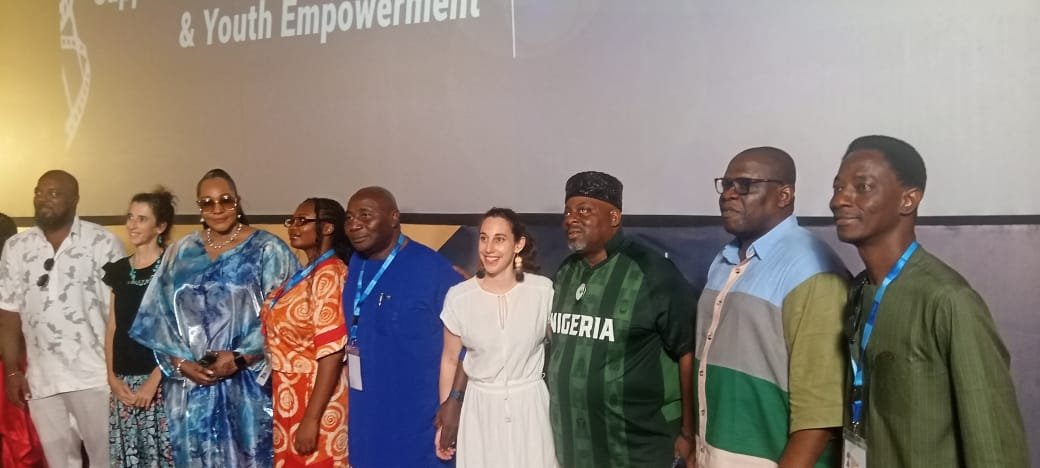
The European Union (EU), National Film and Video Censors Board (NFVCB) and other stakeholders in Nigeria’s creative industry have urged filmmakers to promote positive narratives about the country through films and other storytelling platforms.
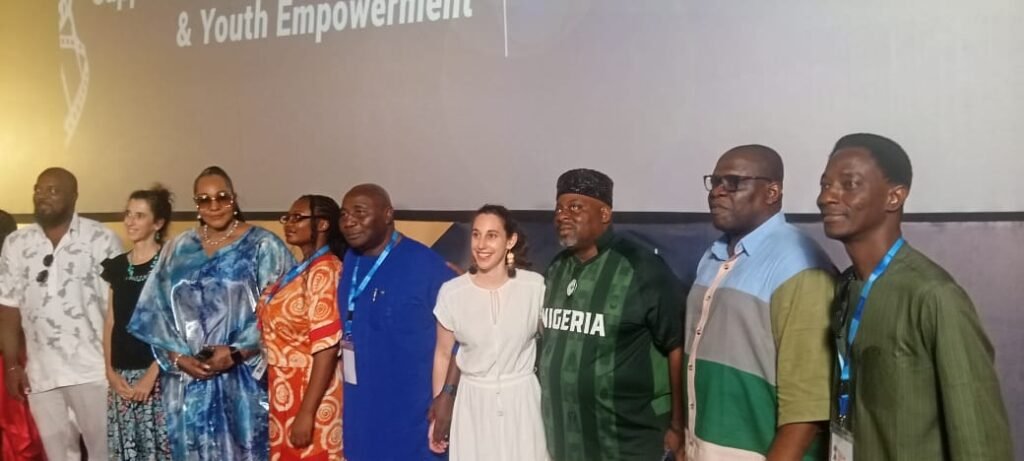
They made the call during the European Day at the ongoing 2026 Eastern Nigerian International Film Festival (ENIFF), held at Nile Cinema, Enugu, under the theme, “Stories That Build Futures”.
Speaking at the event, the Executive Director and Chief Executive Officer of NFVCB, Dr Shaibu Husseini, said films remained powerful instruments for national integration, cultural preservation and societal transformation.
Husseini, who commended the festival organisers for sustaining the initiative, said storytelling played a significant role in shaping how people understood their history, interpreted present realities and imagined their future.
He noted that Nigeria’s cultural, linguistic, religious and ethnic diversity provided rich resources for filmmakers to develop compelling stories capable of strengthening national unity and identity.
The NFVCB chief executive urged filmmakers to confront societal challenges honestly while highlighting resilience, possibilities and positive developments within the country.
He identified Nigeria’s oral traditions, festivals, music, folklore, literature, fashion and indigenous knowledge systems as valuable materials for contemporary filmmaking.
Husseini, however, cautioned that cultural preservation should not amount to stagnation, urging filmmakers to combine traditional values with modern experiences.
He said the industry should prioritise stories that preserve Nigeria’s history, encourage critical thinking, inspire possibilities and contribute to building a sustainable creative economy.
Also speaking, the Head of the European Union Delegation to Nigeria, Ambassador Gautier Mignot, represented by the EU Policy Officer, Lucia Galofré, said stories and opinions shared through films and digital platforms could influence people’s choices and shape society’s future.
Mignot said the EU’s collaboration with the festival focused on the role of storytelling and public opinion in shaping the future, particularly through citizens’ participation and democratic choices.
He observed that short films, panel discussions and stories shared on social media had the capacity to influence decisions, especially among young Nigerians.
The EU delegation expressed optimism that young filmmakers participating in the festival would play significant roles in shaping conversations about Nigeria’s future.
In his remarks, the Director-General of the National Council for Arts and Culture (NCAC), Mr Obi Asika, urged Nigerian filmmakers to embrace indigenous stories as a pathway to international recognition.
Asika cautioned against abandoning local narratives in an attempt to appeal to foreign audiences, insisting that authentic Nigerian stories could attract global interest.
“Go local to go global. All this stuff about English for some global audience, forget it,” he advised.
He explained that compelling stories had universal appeal because human experiences, including love, pain and loss, were common across societies, irrespective of cultural differences.
Earlier, the Founder and Director of ENIFF, Mrs Ujuaku Nwakalor-Akukwe, said the festival was established to create a world-class international film platform in South-East Nigeria and expose young people to opportunities in the creative industry.
She said the initiative, which began in 2020, was designed to bring international film experiences to Enugu while providing young people with training, mentorship and financial rewards.
Nwakalor-Akukwe disclosed that the organisation had trained more than 7,000 people and empowered about 300 through its various programmes.
She explained that the Eastern Nigerian Film and Arts Initiative, the non-governmental organisation behind the festival, conducted training programmes from January to October 2026 before culminating in the annual festival in November.
According to her, the initiative also connects trained participants with media organisations and production companies to facilitate employment opportunities.
The ENIFF founder emphasised the importance of encouraging young filmmakers, particularly members of Generation Z and Generation Alpha, to tell positive stories about Nigeria.
“We don’t have any other country except Nigeria, so we must tell the positive story about Nigeria,” she said.
She noted that Hollywood had successfully projected America’s image internationally through films, urging Nollywood to adopt a similar approach in showcasing Nigeria’s cultural identity and positive attributes.
Nwakalor-Akukwe acknowledged the European Union’s financial and other forms of support for the festival, identifying MTN, the British Council and Afia TV, Enugu, as additional partners.
Highlights of the European Day included a panel discussion on storytelling and the presentation of cheques to winners of the European Union short film competition.