The Reproduction Rights Society of Nigeria (REPRONIG) has sensitised universities, polytechnics, colleges of education, publishers, authors, and other creative professionals in the South-East on copyright licensing and digital rights management.
The organisation said the sensitisation was to protect intellectual property and ensure creators receive royalties from the use of their works.
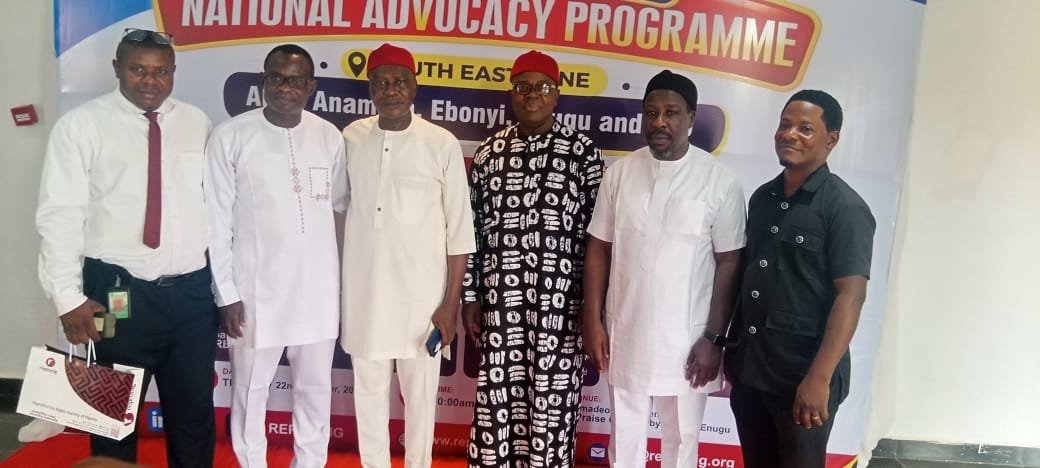
They stated this on Thursday in Enugu during REPRONIG’s South-East Zonal Advocacy and Sensitisation Programme for authors, publishers, academics and other stakeholders in the creative industry.
Speaking at the event, Board Member of REPRONIG, Chief Uchenna Anioke, said that the programme was designed to enlighten stakeholders in the education and creative sectors on their rights under the Nigerian Copyright Act.
Anioke said that the advocacy targeted universities, polytechnics, colleges of education, publishers, journalists, artists and other creative professionals.
He explained that REPRONIG was committed to helping authors and publishers to access their secondary rights, particularly compensation arising from the reproduction of their works.
“The essence of this programme is to educate stakeholders on copyright law and the role of REPRONIG in ensuring that authors and publishers benefit from the secondary use of their intellectual works,” he said.
Also speaking, the Commandant of NCC, Enugu State Command, Mr Macfoy Akachukwu, said the commission had intensified monitoring and enforcement activities to combat piracy across the state.
Akachukwu said that the commission regularly inspected printing houses, publishing firms and markets to identify and apprehend those involved in copyright infringement.
According to him, the commission has also strengthened its efforts to tackle online piracy following the increasing use of digital platforms to reproduce and distribute copyrighted materials illegally.
“The commission has Online Copyright Inspectors and a Special Task Force Against Online Piracy working daily to address these challenges,” he said.
The commandant urged authors and publishers whose works had been pirated to report such cases promptly to enable the commission to investigate and take appropriate action.
He also encouraged academics and authors to join relevant professional associations to benefit from copyright protection and renumeration opportunities.
Similarly, a Consultant to REPRONIG, Dr Samuel Owokoniran, said that many Nigerian authors and publishers were unaware of the financial benefits available to them under the country’s copyright framework.
Owokoniran said that the society embarked on the nationwide advocacy programme to bridge the information gap and encourage copyright owners to take advantage of existing remuneration opportunities.
According to him, authors invest considerable time, money and resources in producing books but often lose potential earnings through unauthorised photocopying and other forms of reproduction.
“The essence of taking this programme across the country is to create awareness and ensure that rights owners benefit from their intellectual property,” he said.
Owokoniran commended the Federal Government for its support in strengthening copyright administration and enforcement in Nigeria.
He said that the activation and release of copyright levy funds had provided opportunities for rights owners across different creative sectors to receive compensation.
In his remarks, a member of the Interim Executive Committee of the Academic and Non-fiction Authors Association of Nigeria (ANFAAN), Prof. Sunny Udeze, expressed concern over the low level of awareness about copyright protection among academics.
Udeze, a Professor of Mass Communication, said that many lecturers and textbook authors in the South-East were unaware of the existence and benefits of REPRONIG and ANFAAN.
He explained that both organisations were established to protect the interests of authors against piracy, plagiarism and unauthorised reproduction of their works.
The professor recalled how one of his books was pirated in Akwa Ibom, saying the incident exposed the challenges faced by authors in protecting their intellectual property.
Udeze expressed optimism that the programme would improve awareness and encourage more academics to join the associations.
He explained that ANFAAN catered specifically for academic and non-fiction authors, including those who produced textbooks for teaching and research.