
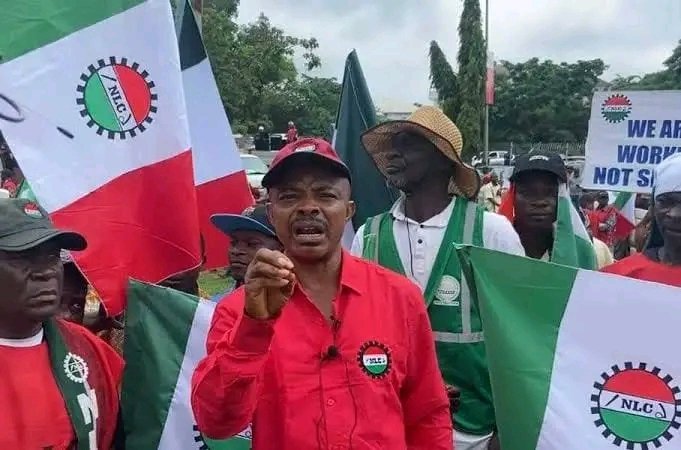
ENUGU — The National Executive Council (NEC) of the Nigeria Labour Congress (NLC) is meeting in Enugu, where the death of its General Secretary, Mr Emmanuel Ugboaja, was announced.
The meeting is being attended by the NLC President, Comrade Joe Ajaero, members of the National Administrative Council (NAC), NEC members, state council chairpersons, delegates of industrial unions and other invited guests.
Welcoming the delegates on Thursday, the Chairman of the Enugu State Council of the NLC, Comrade Fabian Nwigbo, said the state was honoured to host the NEC meeting and appreciated the choice of Enugu as the venue.
Nwigbo commended Gov. Peter Mbah for what he described as the administration’s labour-friendly disposition and commitment to workers’ welfare.
He specifically cited the payment of a N25,000 wage award to workers following the removal of the Federal Government’s fuel subsidy and the subsequent approval and payment of an N80,000 minimum wage, above the N70,000 national minimum wage approved by the Federal Government.
He also commended the government for the regular payment of workers’ salaries and the promotion of workers as and when due.
The NLC state council chairperson, however, appealed to the state government to fulfil its promises concerning the settlement of long-outstanding gratuity arrears owed to retired workers, implementation of the N32,000 minimum pension for pensioners and completion of the Labour Secretariat commenced by the previous administration.
“These matters remain important to the welfare and dignity of our workers, both serving and retired, and we trust that the government will give them the urgent attention they deserve,” Nwigbo said.
He said the meeting was more than a statutory gathering, describing it as an opportunity to reflect, deliberate and strengthen the Congress’ collective resolve to confront challenges facing Nigerian workers and the wider society.
Nwigbo identified rising cost of living, erosion of purchasing power, insecurity, unemployment, inadequate social protection and other socio-economic pressures as challenges placing significant burdens on workers and their families.
He called for a united, courageous, responsible and constructive labour movement, urging the Congress leadership to remain faithful to the principles of unity, equity, fairness, accountability and solidarity upon which the NLC was founded.
He expressed confidence that the deliberations would produce resolutions capable of advancing the interests and aspirations of Nigerian workers.
Responding, the Enugu State Government, represented by the Secretary to the State Government, Prof. Chidiebere Onyia, who declared the meeting open on behalf of Gov. Peter Mbah, expressed the administration’s willingness to address the issues raised by the NLC state council within a record time.
The meeting was, however, overshadowed by the death of the NLC General Secretary, Mr Emmanuel Ugboaja, who died at the age of 60 after a protracted illness.
Ajaero announced Ugboaja’s death to members of the NLC NEC during the ongoing meeting in Enugu after reading a letter from the deceased’s family formally informing the Congress leadership of his passing.
Ugboaja, a lawyer and veteran trade unionist, became the NLC General Secretary in August 2019, succeeding Mr Peter Ozo-Eson.
He was born on May 15, 1966, and obtained a degree in Law from the University of Calabar in 1987.
He initially practised law privately for about four years before joining the trade union movement in 1993.
Ugboaja subsequently rose through the ranks of the labour movement, serving in various capacities before emerging as the fifth General Secretary of the NLC since the establishment of the Congress in 1978.
As General Secretary, he played key roles in the administrative and strategic affairs of the NLC, including industrial relations, negotiations with government and employers, coordination of affiliates and mobilisation of workers.
His death comes at a time when organised labour remains engaged with government over workers’ welfare, wage implementation and broader economic policies.
![US publishes names, photos of 24 Nigerians to be deported [FULL LIST]](https://frontlineafrica.com.ng/wp-content/uploads/2026/10/united-states-flag.jpg)