ONITSHA — The Federal Government has ordered the full closure of the First Niger Bridge in Onitsha, Anambra State, for two weeks to enable emergency maintenance and rehabilitation works on the facility.
The Acting Federal Controller of Works, Federal Ministry of Works, Anambra State Field Headquarters, Mr Timothy Emenike, announced this in a statement, saying the closure would take effect from Monday, Sept. 7, and the bridge was expected to reopen on Monday, Sept. 21.
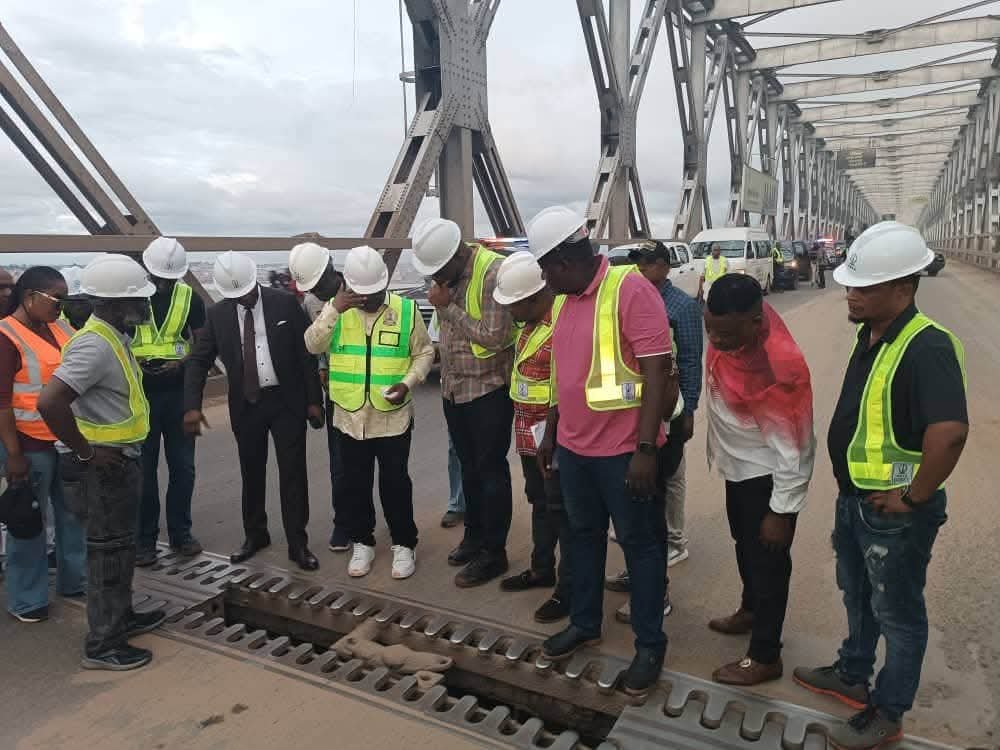
Emenike said the intervention followed a recent working visit to Anambra by the Minister of Works, Sen. Engr. David Nweze Umahi, who expressed concern over the deteriorating condition of the bridge, particularly its carriageway and some components affected by vandalism.
The affected components include portions of the expansion-joint steelwork and nuts and bolts on the stanchion and steel truss.
The ministry said Messrs SKECC, the contractor handling the Km 0+000 to Km 20+000 section of the Onitsha-Enugu Dual Carriageway, had been directed to undertake the emergency intervention. The work will include milling and removal of the deteriorated asphalt surface, laying of an approximately 40mm asphalt wearing course and other maintenance and safety works.
According to the statement, the intervention will also include installation of solar-powered streetlights and closed-circuit television cameras to improve surveillance and deter vandalism.
The ministry said the works would be carried out during the day and at night to accelerate completion and reduce disruption to motorists.
The ministry directed motorists and other road users to use the Second Niger Bridge through Obosi towards Asaba, Delta State, and other destinations beyond throughout the closure.
It said traffic diversion arrangements, road signs, safety barriers and traffic-control personnel would be deployed, while motorists were advised to reduce speed, avoid reckless overtaking, obey diversion instructions and allow additional travel time.
The Federal Ministry of Works said the temporary closure was necessary in the public interest to restore the First Niger Bridge to a safer and more efficient condition and improve traffic flow along the important transportation corridor. It appealed to road users, residents and businesses for patience and cooperation during the rehabilitation period.
![US publishes names, photos of 24 Nigerians to be deported [FULL LIST]](https://frontlineafrica.com.ng/wp-content/uploads/2026/10/united-states-flag.jpg)