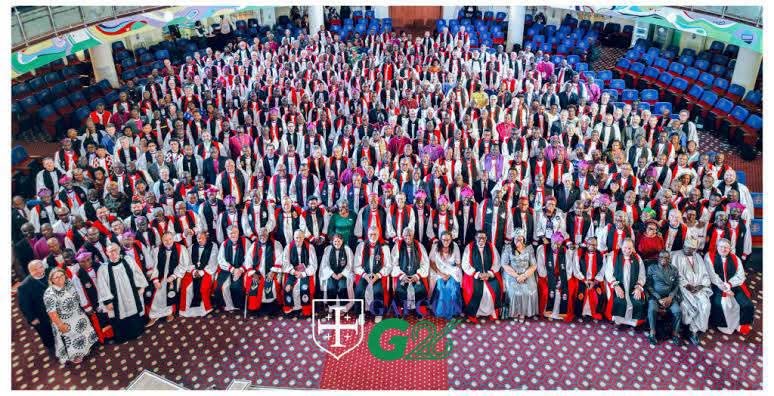
Abuja— The Global Anglican Council has approved Abuja, Nigeria, as the headquarters of the Global Anglican Communion, a structure established through the reorganisation of the GAFCON movement.
The Chairman of the Global Anglican Council, The Most Rev. Dr Laurent Mbanda, announced the decision in a statement issued on Saturday, saying it was reached at the council’s meeting in Recife, Brazil, on Aug. 22.
Mbanda said the decision followed discussions on how best to strengthen and support the future life and ministry of the global fellowship.
He said Abuja had acquired particular significance in the development of the new structure, having hosted the G26 gathering from March 3 to March 6, 2026, where 347 Anglican bishops and 121 lay and clerical leaders from 27 provinces participated.
The gathering produced the Abuja Affirmation, which declared that GAFCON had reordered the Anglican Communion into what its leaders described as a “truly Global Church.”
“As the Global Anglican Communion, it is fitting that the city where this new chapter was so clearly articulated should also become a physical home from which we serve Global Anglicans throughout the world,” Mbanda said.
The development followed a major restructuring announced at the Abuja meeting, during which the GAFCON Primates’ Council was replaced by the Global Anglican Council as the principal governing body of the movement. Mbanda was elected chairman, with other bishops, clergy and lay representatives forming the new council.
The restructuring formed part of a wider dispute within global Anglicanism over doctrine, governance and the authority of the traditional instruments of the Anglican Communion.
GAFCON leaders have argued that existing structures no longer adequately represent what they regard as the majority of practising Anglicans, particularly in Africa and other parts of the Global South.
GAFCON, or the Global Anglican Future Conference, was formed in 2008 by conservative Anglican leaders concerned about theological developments within parts of the Anglican Communion.
The movement has since developed a significant network of Anglican provinces, churches and leaders, particularly across Africa, Asia and the Global South.
At the Abuja meeting, the leaders said the reorganisation was intended to provide a new framework for Anglican churches committed to their interpretation of historic Christian teaching, while describing the process as a “reordering” rather than simply a departure from Anglicanism.
Mbanda said the decision to establish the headquarters in Abuja was also informed by the importance of having a physical administrative centre despite the ability of modern technology to facilitate cooperation across countries and continents.
He said the proposed headquarters could eventually develop beyond an administrative centre into a place for “gathering, training, and equipping leaders” as the Global Anglican Communion pursues the proclamation of the Gospel and the strengthening of the Church.
The council chairman said considerable work remained in establishing the new headquarters and expressed appreciation for the enthusiasm of the Church of Nigeria (Anglican Communion) as discussions on the project begin.
He said the council hoped that from Abuja it would serve Anglicans in different parts of the world and asked members to pray for wisdom and guidance as the plans progressed.
![US publishes names, photos of 24 Nigerians to be deported [FULL LIST]](https://frontlineafrica.com.ng/wp-content/uploads/2026/10/united-states-flag.jpg)