|By Prosper Okoye
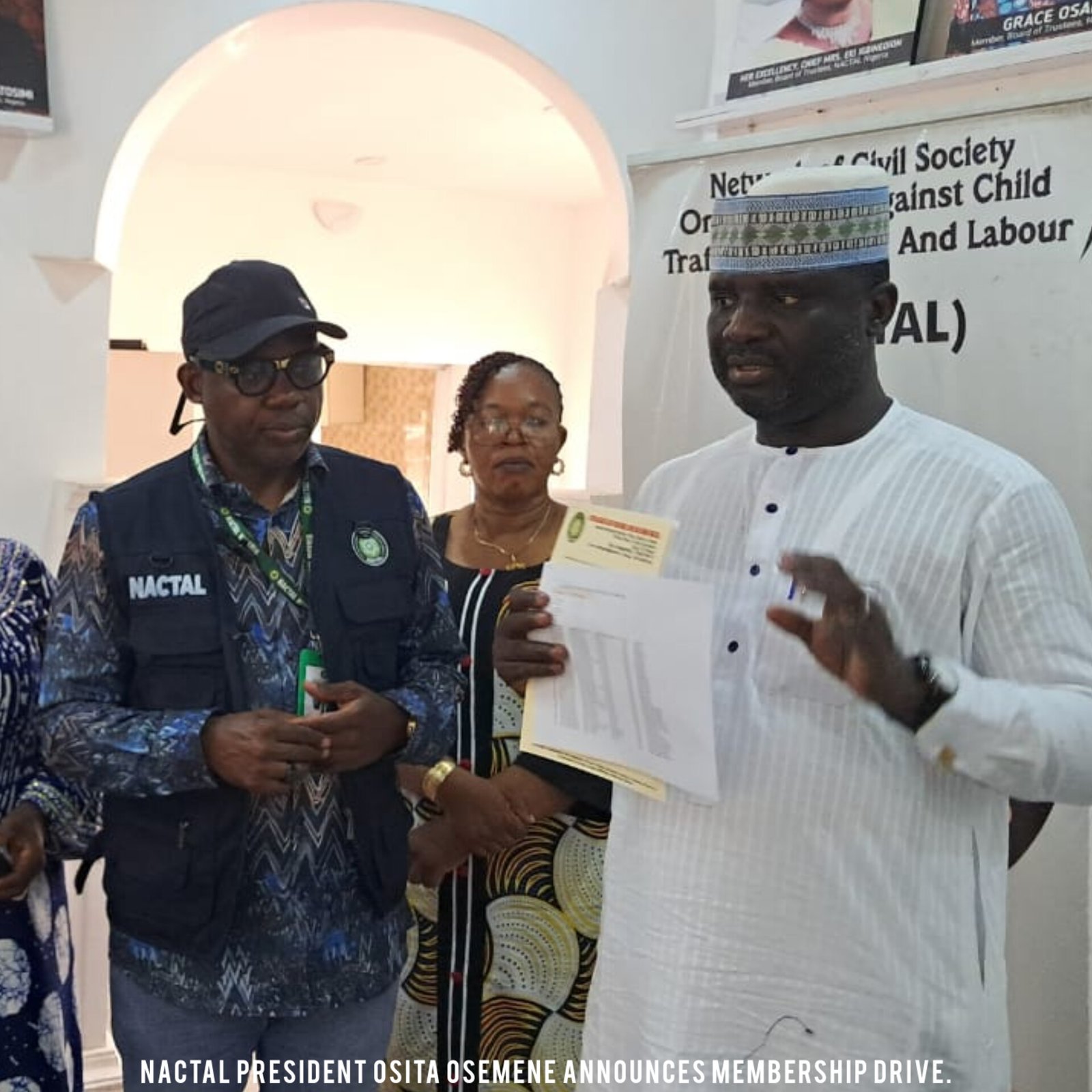
The President of the Network Against Child Trafficking, Abuse and Labour (NACTAL), Osita Osemene, has announced plans to expand the organisation’s membership to 1,000 within six months as part of reforms aimed at strengthening its operations, coordination and visibility.
Osemene disclosed this on Thursday during his first meeting with the National Executive Council following his inauguration as the organisation’s fourth national president in Abuja.
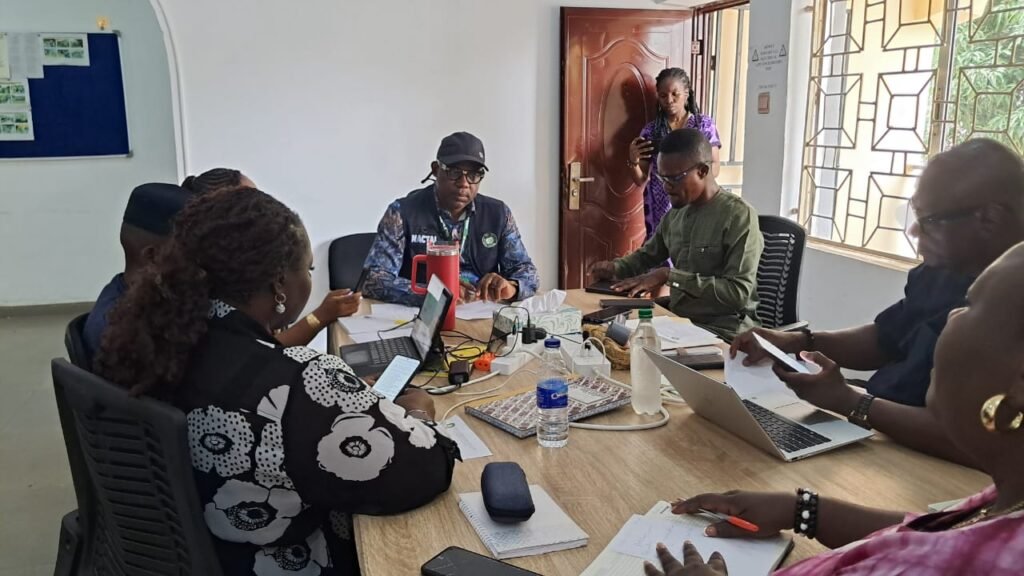
Osemene, who was elected in September 2026 and inaugurated as NACTAL’s fourth national president on October 15, succeeded Abdulganiyu Abubakar following the completion of his tenure.
NACTAL is a coalition of civil society organisations working to combat human trafficking, child abuse, exploitation and forced labour while promoting the protection and rehabilitation of vulnerable persons.
The organisation collaborates with government agencies, development partners and international institutions to strengthen trafficking prevention, victim protection, advocacy and policy development.
Osemene, who is also the Executive Director of Patriotic Citizen Initiatives, said his administration had commenced the implementation of institutional reforms to improve the network’s effectiveness.
He identified communication, membership management, capacity development, coordination and reporting as areas requiring immediate attention.
“We have activated committees that would carry out various functions. We started with establishing the communication team and the essence is to give NACTAL both national and global visibility,” he said.
According to him, the communication committee will strengthen public awareness of NACTAL’s activities and improve engagement with stakeholders within and outside Nigeria.
He said a membership committee had also been established to verify existing members, update membership records and recruit additional organisations into the network.
“In the next three months we are targeting 500 members and in the next six months one thousand,” Osemene said.
He explained that the expansion would strengthen the organisation’s presence across the country and improve cooperation among civil society groups working against human trafficking and related abuses.
The president said another committee would focus on capacity development, coordination and reporting to improve cooperation with development partners and strengthen programme implementation.
He added that his administration would prioritise evidence-based interventions, transparent reporting and greater inclusion of member organisations in project activities.
Osemene maintained that effective coordination and reliable reporting were essential to measuring progress and improving the impact of anti-trafficking programmes.
He also pledged to address grievances arising from the organisation’s recent leadership election, saying reconciliation efforts had commenced to restore unity among members and stakeholders.
“It would be a process in order to look at the issues that have caused the grievance so as to achieve genuine reconciliation,” he said.
According to him, the process would involve examining the concerns raised by aggrieved members and addressing the underlying issues to achieve lasting reconciliation.
Osemene stressed that unity, cooperation and mutual understanding among members were necessary for the organisation to achieve its objectives.
He said his administration would promote inclusive leadership and ensure that member organisations had opportunities to contribute to decision-making and programme implementation.
The president also reiterated his commitment to strengthening institutional accountability and expanding NACTAL’s partnerships with relevant government agencies and development organisations.
He said the network would continue to promote evidence-based approaches to combating human trafficking, child exploitation and unsafe migration.
On regional migration issues, Osemene condemned the reported treatment of Nigerians repatriated by the Ghanaian authorities, expressing concern that some of those affected were victims of human trafficking.
He maintained that suspected trafficking victims should be properly identified, investigated and protected rather than treated as criminals.
“The Nigerian government and CSOs have frowned against the treatment. Most of them were trafficked victims and they must not be treated as criminals. Investigations should be carried out appropriately. Ghana should desist from such practice, it is a shame as we are brothers,” he said.
Osemene called for appropriate investigations into the circumstances surrounding the repatriations and the treatment of affected Nigerians.
He stressed the importance of cooperation between Nigeria and Ghana in addressing human trafficking, irregular migration and the protection of vulnerable migrants.
The NACTAL president also announced a 90-day appraisal period to assess the organisation’s operations and measure progress under his administration.
He said the exercise would provide an opportunity to review existing structures, identify operational challenges and determine areas requiring further intervention.
According to him, the assessment would guide the implementation of reforms aimed at improving institutional performance, accountability and service delivery.
Osemene had earlier outlined a five-point Consolidation and Scale Agenda during his inauguration in Abuja.
The agenda focuses on capacity building and economic empowerment for member organisations, transparency and inclusion, institutional sustainability, counter-trafficking and accountability, as well as evidence-based programming and regional leadership.
He also pledged to strengthen survivor-led organisations through training, mentorship, technical assistance and improved access to funding.
The president said trafficking survivors should be recognised as rights-holders and active participants in decisions affecting their welfare.
He further promised to promote access to shelter, healthcare, psychosocial support, legal assistance, education, skills development and sustainable livelihoods for survivors.
Osemene also announced plans to introduce quarterly reporting by member organisations and coordinators, alongside an annual conference to review anti-trafficking interventions and assess progress nationwide.
He said collaboration with the National Agency for the Prohibition of Trafficking in Persons and other stakeholders would remain central to improving data collection, policy development and the coordination of anti-trafficking activities.
Meanwhile, the immediate past president, Abdulganiyu Abubakar, formally handed over an inventory of office equipment and the organisation’s operational vehicle to his successor.
Abubakar pledged to support the administration whenever his assistance was required.
Osemene’s inauguration took place in Abuja on October 15, 2026, where the Chairperson of NACTAL’s Board of Trustees, Amina Titilayo Atiku-Abubakar, presented him with his certificate of leadership.
Atiku-Abubakar urged him to consolidate the achievements of the previous administration, strengthen institutional partnerships and sustain the network’s interventions against human trafficking and exploitation.